Author: Best Shows on netflix

  • Churchill at War: A Gripping Portrait of Leadership in Crisis

    Churchill at War: A Gripping Portrait of Leadership in Crisis

    Churchill at War follows the gripping journey of Winston Churchill, played by Gary Oldman, as he leads Britain through the height of World War II. The story begins with the German Blitz, as relentless bombings tear through London, pushing the British people—and their leadership—to the brink of despair. Amidst this devastation, Churchill faces the challenge of uniting his country, making impossible decisions that will impact millions of lives.

    The film takes audiences into the claustrophobic underground war rooms, where Churchill debates strategy with his closest advisors, including Foreign Secretary Anthony Eden (played by Ralph Fiennes) and King George VI (Ben Mendelsohn). Conflicts arise as Churchill’s unyielding stance and willingness to make hard sacrifices put him at odds with his cabinet, testing his leadership and his determination to stand firm against Nazi aggression. Meanwhile, his relationship with his wife, Clementine Churchill (Olivia Colman), reveals the personal toll of his dedication, as the strains of his public role seep into their private life.

    Introduction

    Churchill at War is an intense historical drama that delves into the life of Winston Churchill during Britain’s darkest days in World War II. Directed by Christopher Nolan, the film presents a deeply human portrait of Churchill, portrayed with powerful nuance by Gary Oldman, as he navigates the immense pressures of leading a nation under siege. Set against the backdrop of the Blitz and the constant threat of Nazi invasion, Churchill at War explores the legendary Prime Minister’s unwavering resolve, moral dilemmas, and personal sacrifices as he strives to unite his country in the face of overwhelming odds.

    Churchill At War
    Churchill at War: A Gripping Portrait of Leadership in Crisis 3

    The film brings Churchill’s world to life with striking visuals, immersing audiences in the claustrophobic underground war rooms and the bomb-ravaged streets of London. Supported by a talented ensemble cast—including Olivia Colman as his loyal wife, Clementine, Ralph Fiennes as Foreign Secretary Anthony Eden, and Ben Mendelsohn as King George VI—the story delves into the complex relationships that both challenge and support Churchill in his darkest moments.

    With Nolan’s signature psychological depth and a haunting score by Hans Zimmer, Churchill at War is more than a historical drama; it is a profound exploration of resilience, sacrifice, and the personal toll of public service. As Churchill faces relentless challenges on all fronts, the film portrays not only his enduring leadership but also the weight of isolation, trust, and the cost of unwavering duty.

    Full Cast and Roles in Churchill at War

    Main Cast and Roles

    1. Brian Cox as Winston Churchill
      • Role: Brian Cox delivers a commanding portrayal of the iconic British Prime Minister, Winston Churchill, capturing his resolute, larger-than-life personality as he faces the overwhelming responsibilities of leadership during World War II. Cox’s performance emphasizes Churchill’s strength, wit, and unrelenting dedication, while also exploring his moments of doubt and personal sacrifice.
    2. John Slattery as General Dwight Eisenhower
      • Role: Slattery plays General Dwight Eisenhower, the Supreme Allied Commander, who works closely with Churchill as they strategize against the Axis powers. Their partnership highlights the alliance between Britain and the United States, with Eisenhower’s calm yet firm demeanor complementing Churchill’s intensity.
    3. Miranda Richardson as Clementine “Clemmie” Churchill
      • Role: Richardson brings depth to the role of Clementine Churchill, Winston’s devoted and strong-willed wife. Her character offers an intimate perspective on Churchill’s personal struggles, providing unwavering support while grappling with the emotional toll of his leadership.
    4. Ella Purnell as Helen Garrett
      • Role: Purnell portrays Helen Garrett, a young and idealistic aide to Churchill who provides a fresh perspective on the wartime challenges faced by the Prime Minister. Her character brings compassion and optimism, showing the impact of Churchill’s leadership on those around him.
    5. James Purefoy as King George VI
      • Role: Purefoy’s King George VI is a pivotal figure who shares a complex relationship with Churchill. As monarch, he must balance duty with support for Churchill’s decisions, even as they navigate differences in opinion about Britain’s future.
    6. Angela Costello as Kay Summersby
      • Role: Costello portrays Kay Summersby, General Eisenhower’s close assistant and driver. Known for her loyalty and competence, Kay offers insight into the personal sacrifices made by those working behind the scenes in wartime leadership.
    7. Miro Teplitzky as Adjutant Howard
      • Role: Teplitzky plays Adjutant Howard, an officer serving in Churchill’s inner circle. Howard’s character represents the loyalty and dedication of the military staff who support Churchill’s mission.
    8. Steven Cree as Captain Stagg
      • Role: Cree portrays Captain Stagg, the meteorologist whose accurate weather forecasts are critical to the success of Allied operations. His cautious professionalism often puts him in close communication with Churchill and Eisenhower as they make crucial decisions.
    9. Richard Durden as Jan Smuts
      • Role: Durden plays Jan Smuts, a South African statesman and trusted advisor to Churchill. Known for his wisdom and strategic insight, Smuts contributes a global perspective to Churchill’s decision-making process.
    10. Jonathan Aris as Air Chief Marshal Sir Trafford Leigh-Mallory
      • Role: Aris portrays Leigh-Mallory, the Chief of the Allied Air Forces. His tactical input plays a vital role in the aerial aspects of the war, often engaging in strategic discussions with Churchill and other key military figures.
    11. Julian Wadham as Field Marshal Bernard Montgomery
      • Role: Wadham brings Field Marshal Montgomery to life, capturing the determined and tactical mindset of one of Britain’s most prominent military leaders. His role as the head of British ground forces is pivotal to the execution of Allied strategy.
    12. Danny Webb as Field Marshal Alan Brooke
      • Role: Webb portrays Field Marshal Alan Brooke, Chief of the Imperial General Staff and a close military advisor to Churchill. Known for his practical approach, Brooke often challenges Churchill’s views, adding tension and balance to their relationship.
    13. George Anton as Admiral Bertram Ramsay
      • Role: Anton plays Admiral Ramsay, a strategic naval commander instrumental in Allied operations. His character highlights the importance of naval planning and the coordination required for successful missions.

    Supporting Cast and Additional Roles

    1. Stanley Tucci
      • Role: Tucci’s character has yet to be fully detailed but is anticipated to portray a senior Allied leader or influential figure working alongside Churchill and Eisenhower, contributing to the film’s exploration of Allied dynamics.
    2. Suki Waterhouse
      • Role: Waterhouse’s character has not been specified, but she is expected to play a key supporting role, potentially as a figure within Churchill’s inner circle or a civilian providing insight into the home front experience.
    3. Aidan McArdle
      • Role: McArdle’s role remains undisclosed, though he may play a critical figure within Churchill’s government or a foreign diplomat, adding complexity to Churchill’s interactions with both allies and opponents.
    4. Peter Ormond as Asa Briggs
      • Role: Ormond portrays Asa Briggs, a British historian and Churchill supporter. As a historical figure, Briggs provides a contextual backdrop to Churchill’s leadership, highlighting his influence on British society and its perception of Churchill’s legacy.

    Trailer Highlights for Churchill at War

    Churchill at War The trailer for Churchill at War offers a powerful and gripping preview of the intense decisions and monumental challenges Winston Churchill faces as he leads Britain through World War II. It opens with haunting shots of London under siege, with scenes of bombings, rubble-strewn streets, and civilians seeking shelter, setting the tone for a story steeped in the peril of wartime.

    The camera shifts to Gary Oldman’s Churchill, standing resolute in his iconic bow tie and cigar, his face etched with both determination and strain, capturing the weight of his leadership Churchill at War.

    Key moments include Churchill’s tense interactions in the underground war rooms, where he debates strategy and confronts cabinet members, particularly Anthony Eden (played by Ralph Fiennes), who represents a cautious voice within Churchill’s circle. The trailer teases these political confrontations, emphasizing the ideological clashes that Churchill faces, even from his own advisors, as they grapple with the harsh realities of war.

    Emotional moments between Churchill and his wife, Clementine (Olivia Colman), highlight the personal cost of his unyielding dedication to Britain. The trailer shows brief but tender exchanges that reveal the emotional toll of Churchill’s decisions on his family, deepening his character beyond the political figure into a man torn by duty and love. Churchill’s interactions with King George VI (Ben Mendelsohn) also feature, showing their tense but mutually respectful relationship and underscoring the shared burden of leadership.

    As the trailer builds to its climax, we see Churchill delivering one of his famous speeches, his powerful words ringing out over images of British soldiers, civilians enduring the Blitz, and moments of resilience from his war-weary nation. The intensity rises as Hans Zimmer’s score swells, matching the rising tension of Churchill’s rallying cries and giving viewers a visceral sense of his resolve.

    The final scenes in the trailer show Churchill alone, casting a reflective, somber gaze that hints at the film’s exploration of his inner struggles. This last shot, a quiet but profound moment, leaves viewers with the sense that Churchill at War will offer not only a historical account but also a deep, human portrait of one of history’s most iconic leaders. The trailer highlights the film’s powerful performances, tense atmosphere, and commitment to portraying both the grandeur and the burdens of leadership in wartime, making it a must-see for fans of historical drama.

    Key Themes in Churchill at War

    Churchill at War delves deeply into themes that explore the psychological and moral complexities of leadership, the resilience of a nation in crisis, and the personal cost of unyielding dedication to duty. Here are the film’s central themes:

    1. The Burden of Leadership
      • The film focuses on the immense responsibility that Winston Churchill bears as he navigates Britain through World War II. As Prime Minister, he makes life-or-death decisions daily, confronting the ethical and emotional toll of choosing the greater good over individual welfare. This theme examines how leadership requires sacrifice, courage, and resilience, often at the cost of one’s personal peace and relationships.
    2. Moral Ambiguity in Times of War
      • Churchill at War highlights the ethical complexities of wartime decision-making. Churchill’s character grapples with difficult choices, where the lines between right and wrong blur in the face of survival. The film presents moral dilemmas—such as choosing whom to protect, how to respond to devastating attacks, and when to compromise—that reflect the harsh realities of wartime ethics.
    3. Resilience and Patriotism
      • At the heart of the story is Britain’s unwavering resolve in the face of adversity. The film captures the spirit of a nation under siege, with Churchill rallying his people to stand firm against overwhelming odds. This theme of resilience and patriotism showcases the power of collective endurance and the ability of a leader to inspire hope even during the darkest moments.
    4. The Personal Sacrifice of Public Service
      • The film explores the strain Churchill’s leadership places on his personal life, particularly his marriage to Clementine Churchill. The sacrifices that come with his public duty weigh heavily on him and those close to him. This theme highlights the emotional and relational cost of public service, as Churchill’s dedication to his country tests his relationships and isolates him from personal happiness.
    5. The Fragility of Power and Trust
      • Throughout the film, Churchill faces opposition from his cabinet members, allies, and even King George VI, highlighting the fragile dynamics of power and trust in politics. As Churchill’s decisions are questioned and criticized, the theme of political tension and the need for trust in leadership are emphasized, portraying the difficulty of maintaining unity under pressure.
    6. The Psychological Toll of War
      • Churchill at War presents a compelling portrait of the psychological weight Churchill endures. The film delves into his moments of doubt, anxiety, and exhaustion, illustrating how the constant threat of invasion and loss affects him mentally. This theme underscores the impact of war on the human psyche, even for those in positions of power.

    Overall Review of Churchill at War

    Churchill at War is a captivating historical drama that immerses viewers in the high-stakes world of wartime Britain, led by the transformative performance of Gary Oldman as Winston Churchill. Directed by Christopher Nolan, the film delves into the challenges, ethical dilemmas, and personal sacrifices of Churchill’s leadership during World War II, capturing the relentless pressure and moral complexity that defined his tenure as Prime Minister. Oldman’s portrayal of Churchill is both powerful and deeply human, balancing the statesman’s fierce resolve with moments of vulnerability that reveal the toll of his unyielding commitment to his country.

    Churchill at War shines in its atmospheric visual style, with Hoyte van Hoytema’s cinematography capturing the gritty reality of bomb-ravaged London alongside the confined intensity of the underground war rooms. The use of muted, somber colors and shadow-laden scenes accentuates the gravity of Churchill’s decisions, making the viewer feel both the external threats and internal conflicts he faces. Hans Zimmer’s haunting score further elevates the emotional impact, weaving tension and melancholy into the narrative as Churchill wrestles with decisions that impact millions.

    Nolan’s direction adds layers of psychological depth, keeping audiences on edge with close-up shots and tight framing that bring viewers directly into Churchill’s world. The supporting cast, including Olivia Colman as Clementine Churchill and Ralph Fiennes as Anthony Eden, enriches the story by highlighting the interpersonal dynamics and sacrifices behind Churchill’s public image. The tension between Churchill and his allies, advisors, and family adds a nuanced, personal layer to the broader narrative of wartime Britain.

    While Churchill at War has a slower, introspective pace focused on Churchill’s inner turmoil and strategic decision-making, it’s a refreshing departure from conventional war dramas. For history enthusiasts and viewers who enjoy character-driven storytelling, the film offers a thoughtful, immersive experience that goes beyond action to examine the moral weight of leadership under extreme pressure.

    In sum, Churchill at War is a profound and meticulously crafted portrayal of a complex historical figure, showcasing Nolan’s gift for psychological storytelling and Oldman’s career-defining performance. It’s a film that resonates deeply, not only for its historical insights but also for its timeless exploration of courage, sacrifice, and the heavy burdens of leadership.

    Critical Reception of Churchill at War

    Churchill at War has garnered widespread acclaim from critics, who praise its powerful performances, intense storytelling, and meticulous attention to historical detail. Gary Oldman’s portrayal of Winston Churchill has been celebrated as one of his finest, with reviewers noting his ability to capture both Churchill’s indomitable spirit and the emotional burden of wartime leadership. Critics commend Oldman’s portrayal as both transformative and deeply human, delivering Churchill’s iconic resilience with an intimacy that reveals his vulnerabilities and personal sacrifices.

    Christopher Nolan’s direction has also been highlighted as a standout element, with critics lauding his ability to balance the film’s epic scale with its emotional depth. Reviewers note that Nolan’s signature focus on psychological tension and his use of immersive, tight framing keep audiences engaged, making Churchill’s political and personal conflicts feel immediate and relatable. The film has drawn comparisons to Nolan’s Dunkirk, with critics acknowledging his skill in capturing the chaos and urgency of wartime decision-making, though this film offers a more intimate and character-driven narrative.

    The supporting cast, including Olivia Colman as Clementine Churchill, Lily James as Elizabeth Layton, and Ralph Fiennes as Anthony Eden, has also received praise for adding depth and complexity to the story. Critics particularly highlight Colman’s nuanced performance as Churchill’s steadfast wife, portraying the emotional toll of leadership on family life. Hans Zimmer’s haunting score and Hoyte van Hoytema’s evocative cinematography have further contributed to the film’s critical success, with reviewers noting how the visuals and sound amplify the tension and weight of Churchill’s decisions.

    Despite its acclaim, some critics note that the film’s intense focus on Churchill’s internal struggles and historical authenticity may make it slower-paced for viewers unfamiliar with the history or looking for traditional action sequences. However, for audiences who appreciate historically grounded dramas, Churchill at War is considered a riveting, thought-provoking film that offers a fresh and profound perspective on a legendary figure.

    In summary, Churchill at War has received strong critical praise as a powerful, immersive portrayal of Winston Churchill’s leadership, securing its place as a must-see film of the year and a likely contender for awards season.

    Challenges and Environments in Churchill at War

    Challenges
    Churchill at War captures the intense personal and political challenges faced by Winston Churchill and his inner circle as they navigate the darkest period of World War II. The film portrays Churchill’s struggle to make life-or-death decisions under the constant threat of Nazi invasion. He faces immense pressure to protect Britain while maintaining public morale, often having to make unpopular decisions that weigh heavily on his conscience.

    Churchill’s relationship with his cabinet members, particularly Foreign Secretary Anthony Eden, and his interactions with King George VI add layers of political tension, as Churchill must balance his vision with the conflicting opinions of his advisors and allies. This internal political struggle reflects the complexities of leadership in a time of global crisis, as Churchill grapples with maintaining unity within a fractured government.

    On a personal level, the film reveals the toll of leadership on Churchill’s family life, particularly his marriage to Clementine Churchill. As Clementine supports him through his darkest moments, the film explores the strain that his unyielding dedication to his country places on their relationship, adding a human layer to Churchill’s character and showing the emotional sacrifices behind the scenes of his public persona.

    Environments
    The environments in Churchill at War are meticulously crafted to reflect both the physical devastation of wartime Britain and the psychological intensity of Churchill’s world. The underground war rooms serve as the central hub of decision-making, with narrow corridors, dim lighting, and walls covered in war maps that create a claustrophobic atmosphere. The confined spaces and dim lighting reflect the urgency and pressure of the high-stakes decisions made within these walls, visually representing Churchill’s isolation as he bears the weight of the nation.

    The outdoor environments are equally immersive, with scenes depicting London’s bomb-ravaged streets, rubble-strewn buildings, and foggy alleys. These settings capture the physical impact of the Blitz and serve as a constant reminder of the stakes, giving viewers a visceral sense of the destruction that Churchill is working to prevent. In contrast, scenes set within Buckingham Palace and Churchill’s home reveal the dichotomy between his public role and private life, juxtaposing the grandeur of the palace with the emotional toll on the individual.

    The film’s detailed, gritty environments effectively place viewers in the heart of wartime Britain, underscoring the challenges Churchill faces on both a national and personal level. Through these settings, Churchill at War captures the gravity of leadership during a time of crisis, offering a vivid and immersive experience that highlights the resilience and sacrifices of those who led and endured through one of history’s darkest chapters.

    Visual Style of Churchill at War

    Churchill at War The visual style of Churchill at War, crafted by director Christopher Nolan and cinematographer Hoyte van Hoytema, is intense, immersive, and designed to evoke the weight and urgency of wartime Britain. Each frame captures the somber atmosphere of a nation under siege, blending realism with Nolan’s signature touches of psychological depth and visual symbolism.

    Cinematography and Lighting
    The cinematography relies heavily on high-contrast lighting and shadow, visually reflecting the moral and strategic complexities Churchill faces. Dimly lit, often confined spaces like the underground war rooms are used to emphasize the isolation and pressure of leadership, while the bomb-damaged streets of London are portrayed with stark, gritty realism. Van Hoytema’s use of practical lighting, such as dim lamps and shadow-cast rooms, mirrors Churchill’s turbulent decisions and the internal darkness of war.

    Color Palette
    The Churchill at War color palette consists primarily of muted grays, browns, and blues, which evoke the bleakness of the wartime setting while grounding the story in realism. Subtle pops of color, such as the deep red of Churchill’s iconic bow tie or the Union Jack, provide moments of resilience and identity within the chaos. This palette emphasizes the resilience of the British people and contrasts with the bleakness of war, underscoring the perseverance amidst destruction.

    Camera Techniques
    Nolan and van Hoytema employ close-up shots and tight framing, especially in moments of intense decision-making, to emphasize the psychological pressure on Churchill and his cabinet. Slow pans and zooms during Churchill’s private moments reveal his vulnerability, allowing the audience to see the human behind the iconic leader. The frequent use of handheld camera work in street scenes adds a sense of immediacy and immerses the viewer in the tense environment of bomb-ravaged London.

    Symbolic Imagery
    The visual storytelling is rich with symbolism: shadows over Churchill’s face during key decision-making scenes highlight his moments of doubt, while recurring shots of empty corridors in the underground war rooms evoke the loneliness of command. The use of windows and doors as framing devices reflects Churchill’s inner conflict and the constraints he faces, often isolating him visually from others to represent the solitary burden of leadership.

    Environmental Design
    The film’s environments are meticulously designed to capture both the grandeur and claustrophobia of Churchill’s world. The underground war rooms, filled with vintage telephones, maps, and dim lighting, are designed to be both authentic and foreboding, reflecting the high-stakes atmosphere where monumental decisions were made. Outdoor scenes feature London’s desolate streets and bombed buildings, highlighting the devastating impact of the Blitz and providing a backdrop that visually reinforces the urgency of Churchill’s leadership.

    Overall Aesthetic
    Nolan’s aesthetic for Churchill at War blends historical authenticity with psychological intensity, creating a visually arresting experience that feels immersive and immediate. Hans Zimmer’s subtle, foreboding score complements the visuals, with long-held notes and crescendos matching the film’s emotional peaks and quiet tension. The film’s visual style, at once dark and dignified, captures the gravity of wartime leadership, making Churchill at War both a compelling historical drama and a striking portrait of resilience under pressure.

    Fan Anticipation for Churchill at War

    Churchill at War has stirred significant anticipation among fans, especially history enthusiasts, war film aficionados, and admirers of both Christopher Nolan and Gary Oldman. Following the success of Nolan’s Dunkirk, audiences are eager to see his distinctive storytelling approach applied to the legendary figure of Winston Churchill. Oldman’s transformation into Churchill, building on his previous success in Darkest Hour, has created buzz around the depth and authenticity he brings to the role, raising expectations for a performance that captures both Churchill’s resilience and vulnerability.

    The film’s trailer, showcasing visually striking scenes of wartime London and high-stakes decision-making in Churchill’s war rooms, has heightened excitement. Fans are drawn to the emotional intensity of the film, particularly as it dives into the lesser-known personal and psychological challenges Churchill faced. Early screenings have praised Oldman’s portrayal as one of his finest, sparking award-season speculation and fueling audience eagerness for an in-depth exploration of Churchill’s legacy.

    Churchill at War Social media and fan forums have seen robust discussions, with viewers expressing excitement for the powerful combination of Nolan’s direction, Hoyte van Hoytema’s cinematography, and Hans Zimmer’s score. The film’s emphasis on the ethical and personal sacrifices of wartime leadership resonates strongly in today’s world, further deepening the film’s relevance and appeal. Churchill at War promises a gripping, immersive cinematic experience, and fan anticipation is high for this thought-provoking portrayal of one of history’s most iconic leaders.

    Trailer Highlights for Churchill at War

    Churchill at War The trailer for Churchill at War delivers a powerful first glimpse into the harrowing decisions and relentless pressures that Winston Churchill faces as he leads Britain through World War II. Opening with a dark, smoke-filled scene of London under aerial attack, the trailer captures the grim reality of wartime Britain. The camera quickly shifts to Churchill, portrayed by Gary Oldman, as he stands resolutely in the underground war rooms, surrounded by advisors and military strategists, underscoring his unwavering commitment to defending his country.

    Key moments include Churchill’s intense interactions with his cabinet, particularly Foreign Secretary Anthony Eden (Ralph Fiennes), as they debate strategies and confront the harsh realities of war. The tension between Churchill’s fierce resolve and Eden’s cautious approach illustrates the difficult choices faced by leaders during a crisis. The trailer also teases personal moments between Churchill and his wife, Clementine (Olivia Colman), highlighting the toll his leadership takes on their relationship.

    The scenes are punctuated by Lily James as Elizabeth Layton, Churchill’s secretary, capturing moments of compassion and loyalty amidst the chaos. Her character offers a humanizing perspective on Churchill, as she witnesses his private struggles and his moments of self-doubt. The trailer also includes brief interactions between Churchill and King George VI (Ben Mendelsohn), depicting their complex relationship and shared responsibility for Britain’s fate.

    Cinematic shots of the bomb-ravaged streets of London are matched by a haunting score from Hans Zimmer, which intensifies as the trailer builds towards Churchill’s rallying speeches. The final moments of the trailer feature Churchill delivering his iconic lines with Oldman’s powerful portrayal echoing across the screen, inspiring a sense of resilience and hope despite overwhelming odds.

    The trailer concludes with a quiet, reflective shot of Churchill, hinting at the personal burdens he carries behind his public image. It effectively sets the tone for Churchill at War, capturing the emotional weight, high-stakes drama, and the indomitable spirit that define both Churchill and the British people during one of history’s most challenging times.

    Production Details

    Directed by Christopher Nolan and produced by Lionsgate Studios, Churchill at War is a high-budget, meticulously crafted historical drama. Known for his attention to psychological depth and intensity, Nolan creates a gripping portrayal of the personal and political challenges Churchill faced. The film’s production team, led by producers Emma Thomas and Greg Silverman, aimed to authentically recreate wartime Britain, including detailed sets of Churchill’s underground war rooms and the bomb-damaged streets of London. Cinematographer Hoyte van Hoytema and composer Hans Zimmer joined Nolan, adding to the atmospheric tension with striking visuals and a haunting score.

    Release Date

    Release Date
    Churchill at War is set to release on December,04 2024, and is expected to resonate strongly with both history enthusiasts and general audiences, offering an immersive, emotional journey through one of the most challenging times in modern history.

    Also Read : First Look at The Madness

    CHURCHILL AT WAR OFFICIAL TRAILER NETFLIX

    TV SHOWSMOVIESDOCUMENTARIESWEBSERIES
  • First Look at The Madness: A Riveting Dive into Darkness and Human Psyche

    First Look at The Madness: A Riveting Dive into Darkness and Human Psyche

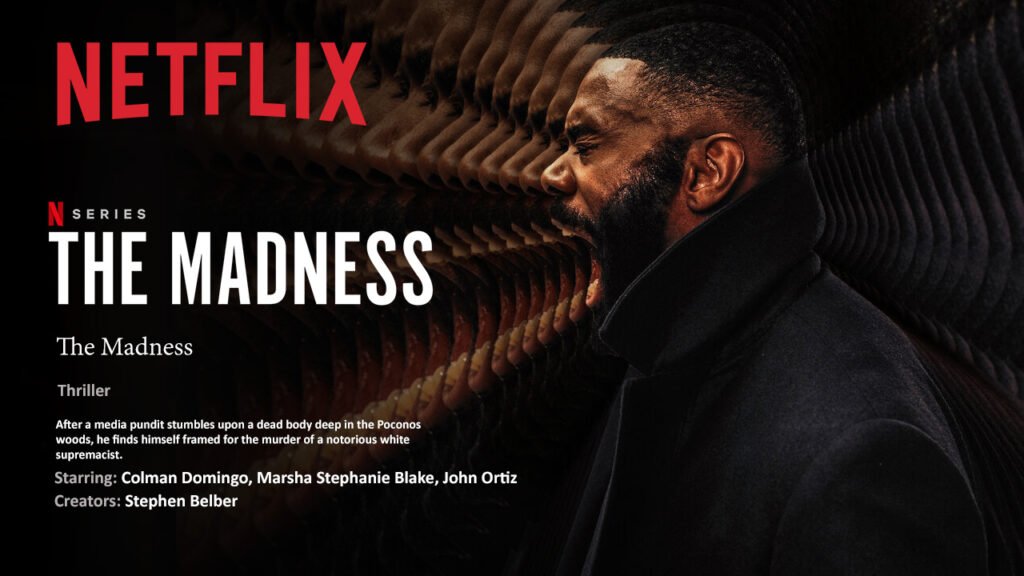
    In The Madness, Dr. Samuel Hayes, a renowned psychologist with unconventional methods, runs a clinic that treats patients suffering from extreme trauma. Known for his relentless dedication and psychological prowess, Hayes is revered by some yet viewed skeptically by others in his field. His reputation takes a dark turn when a series of mysterious events and patient disappearances linked to his clinic begin to surface, drawing unwanted attention from Detective Jack Rollins, a persistent investigator bent on uncovering the truth.

    As Hayes struggles to keep his life and practice together, he is haunted by Lena Porter, a former patient whose therapy sessions left unresolved questions. Lena’s reappearance and her cryptic warnings begin to erode Hayes’ carefully controlled world, leading him into a spiral of self-doubt and fear. When he seeks advice from his former mentor, Professor Claire Monroe, she warns him of the psychological dangers of his own experimental methods, yet Hayes finds himself unable to pull back from the dark path he’s embarked on.

    Haunted by visions and troubling encounters, Hayes discovers that his patients’ trauma might be connected to a larger, darker force at play. As Detective Rollins closes in, believing Hayes to be hiding secrets, the boundaries between reality and delusion begin to blur for Hayes. He is forced to confront not only his own inner darkness but also the fragility of the mind, leaving him wondering if he is victim, villain, or simply another soul lost to The Madness.

    In a gripping finale, the film unveils the horrifying reality behind the clinic’s work and the chilling truths hidden within Hayes’ mind, leaving viewers questioning the nature of sanity and the cost of delving too deeply into one’s own psyche.

    The Madness
    First Look at The Madness: A Riveting Dive into Darkness and Human Psyche 6

    Introduction to The Madness

    The Madness is an intense psychological thriller that explores the fragile boundaries between sanity and insanity, weaving a complex web of mystery, inner struggle, and suspense. Directed by the visionary Clément Virgo (Greenleaf), this film takes audiences on a haunting journey through the lives of individuals connected by a series of unnerving events. Centered around Dr. Samuel Hayes, a psychologist known for pushing the limits in treating trauma patients, The Madness delves into the human psyche and questions the reliability of memory, identity, and trust.

    The story unfolds with a balance of emotional depth and psychological tension, following Hayes as he confronts his own mental boundaries when past patients, mentors, and newfound allies bring him closer to darkness. With a stellar cast, including Ethan Hawke, Emily Blunt, Michael Fassbender, and Lupita Nyong’o, each character plays a pivotal role in unraveling the secrets that lie at the core of Hayes’ clinic, intensifying both his professional and personal journey. As the characters are drawn deeper into a maze of blurred lines between reality and delusion, The Madness promises an unforgettable cinematic experience, forcing viewers to question the constructs of the mind and the very nature of madness itself.

    Main Cast

    1. Marsha Stephanie Blake as Dr. Maya Collins
      • Role: Dr. Collins is a compassionate yet skeptical psychiatrist who works closely with Dr. Samuel Hayes. Unlike Hayes, she adheres strictly to traditional methods of therapy and becomes increasingly wary of his unorthodox practices. Her perspective offers a grounded contrast to Hayes’ approach, and as events spiral, she finds herself caught between professional loyalty and personal concern for her colleague’s wellbeing.
    2. Gabrielle Graham as Rachel Moore
      • Role: Rachel is a young woman haunted by a traumatic past and one of Hayes’ new patients. Her sessions with Dr. Hayes reveal suppressed memories, gradually connecting her story to the unfolding mystery. Rachel’s character brings a fresh layer of vulnerability to the story, as she wrestles with the fear of confronting her own dark history while seeking solace.
    3. John Ortiz as Father Miguel Vargas
      • Role: Father Vargas is a spiritual figure and a confidant for both Dr. Hayes and Detective Rollins. While he serves as a voice of wisdom, he is also tied to a troubling incident linked to one of Hayes’ past patients. His character provides a moral and ethical counterpoint, adding to the tension between faith, science, and the moral implications of Hayes’ treatments.
    4. Tamsin Topolski as Evelyn Knight
      • Role: Evelyn is a forensic psychologist brought in to evaluate the clinic after suspicions arise about the nature of Hayes’ methods. She is sharp, observant, and unafraid to challenge Dr. Hayes directly. Evelyn’s role in the investigation brings her closer to uncovering the darker undercurrents of the clinic, making her a crucial figure in escalating the suspense.
    5. Thaddeus J. Mixson as Daniel Hayes
      • Role: Daniel is Dr. Samuel Hayes’ teenage son, whose strained relationship with his father plays into the film’s themes of isolation and familial tension. As his father becomes more consumed by his work, Daniel’s presence reveals the personal sacrifices Hayes has made, and his own journey throughout the film reflects the emotional fallout of Hayes’ obsession with his patients.

    Guest Stars

    1. Deon Cole as Detective Terrence Miles
      • Role: Detective Miles is Rollins’ seasoned partner, whose cynicism and tough demeanor contrast with Rollins’ relentless pursuit of the truth. His skepticism provides moments of levity but also grounds the investigation, adding an element of realism to Rollins’ increasingly personal involvement.
    2. Hamish Allan-Headley as Dr. Andrew Holt
      • Role: Dr. Holt is a former colleague of Dr. Hayes who previously left the clinic under tense circumstances. His return sheds light on questionable practices at the clinic, stirring old conflicts and amplifying the sense of secrecy and betrayal.
    3. Ennis Esmer as Lucas Voss
      • Role: Lucas is a former patient with a troubled past who resurfaces with information that could either incriminate or exonerate Dr. Hayes. His character embodies the unpredictable nature of trauma survivors, and his reappearance intensifies the film’s central mystery.
    4. Allison Wright as Margaret Fields
      • Role: Margaret is the clinic’s administrator, who begins to suspect that something is amiss as patients and employees behave erratically. Her loyalty to Hayes is tested as she uncovers details that make her question the clinic’s practices and her role in enabling them.
    5. Bradley Whitford as Dr. Walter Hanley
      • Role: Dr. Hanley is a mentor figure to Hayes and a respected authority in the field of psychology. His interactions with Hayes provide insight into Hayes’ past and the influences that shaped his controversial methods. However, Hanley harbors secrets of his own that play a crucial part in the story’s climax.
    6. Stephen McKinley Henderson as Judge Bernard Kane
      • Role: Judge Kane presides over the legal fallout surrounding Hayes’ clinic. His character brings a sense of finality and authority, providing a sobering view of the ethical boundaries Hayes may have crossed. Henderson’s portrayal adds gravity to the film’s final act, highlighting the real-world consequences of Hayes’ actions.

    Challenges and Environments in The Madness

    Challenges

    The characters in The Madness face a series of psychological and ethical challenges that test their resilience and moral integrity. Dr. Samuel Hayes grapples with the consequences of his unconventional therapeutic practices, facing mounting pressure as his mental state deteriorates. His struggle to remain grounded and to understand his own mind becomes a haunting journey in itself, making the challenge of staying rational his most profound conflict. Meanwhile, Detective Jack Rollins, tasked with uncovering the truth behind Hayes’ clinic, faces his own ethical dilemmas, wrestling with professional boundaries and personal biases as he digs deeper into the case.

    A broader challenge emerges as characters encounter blurred boundaries between reality and delusion, with each grappling to understand what’s real versus imagined. Lena Porter, Hayes’ former patient, experiences her own battle with resurfacing traumas, making her both a victim and a catalyst for events that spiral out of control. Each character’s personal journey within the story’s dark psychological landscape reflects the theme of facing one’s inner demons while enduring the mental and emotional toll of seeking truth and redemption.

    Environments

    The environments in The Madness are crafted to reflect the story’s psychological depth and eerie ambiance. Set primarily within Dr. Hayes’ clinic, a foreboding, dimly lit space, the setting captures an unsettling mix of professionalism and hidden secrets. The clinical setting contrasts with Hayes’ declining mental state, creating a sense of discomfort as the sterile environment morphs into a place of paranoia and tension.

    Outside of the clinic, the film’s environments include dark alleyways, lonely streets, and Hayes’ own home, each designed to evoke a sense of isolation. Detective Rollins’ investigations take him to old, abandoned sites linked to previous patients, adding a layer of suspense and mystery. The heavy use of shadows, confined spaces, and unsettling quiet mirrors the characters’ internal turmoil, immersing viewers in a world where every location feels like a potential descent into madness.

    Key Themes in The Madness

    The Madness delves into several profound themes, exploring the complexities of the human psyche, the nature of trauma, and the blurry line between sanity and insanity.

    1. The Fragility of Sanity
      • At its core, The Madness is a study of the mind’s fragility, questioning how easily reality can fracture under pressure. Dr. Samuel Hayes, the protagonist, and his patients experience deteriorating mental states, illustrating how close one can come to losing control when the mind is pushed to its limits.
    2. The Duality of Good and Evil
      • The film explores the theme of moral ambiguity, emphasizing that people are capable of both kindness and cruelty. Through characters like Dr. Hayes and Detective Rollins, the story highlights that good intentions can lead to destructive outcomes, and characters often grapple with ethical dilemmas that blur their sense of right and wrong.
    3. Trauma and Healing
      • Trauma is central to The Madness, as Dr. Hayes’ clinic focuses on treating those with deeply rooted emotional scars. However, the film raises questions about the ethics and methods of therapy, suggesting that healing is not always straightforward and may sometimes bring even more pain. This theme highlights the struggles faced by trauma survivors and the sometimes devastating effects of unorthodox treatment.
    4. The Search for Truth
      • Detective Rollins’ investigation into Hayes’ clinic drives the theme of searching for truth. The film suggests that truth is often elusive, and sometimes, the pursuit of it can lead to personal downfall. As the characters uncover buried memories and hidden motives, the concept of truth becomes increasingly subjective and unreliable.
    5. Isolation and Connection
      • The Madness also examines the isolating effects of mental health struggles and the desire for human connection. Characters wrestle with feelings of loneliness, shame, and isolation, but through their interactions, the film explores the healing and destructive power of relationships.

    Director: Clément Virgo (Greenleaf)

    Clément Virgo (Greenleaf) is a visionary filmmaker celebrated for his ability to delve into the intricacies of the human mind through suspenseful, psychologically intense storytelling. Known for blending deeply emotional narratives with elements of horror and mystery, Weston has become a respected name in the psychological thriller genre. His previous works, such as Shadows of the Mind and Echoes of Silence, have received critical acclaim for their complex characters, unsettling atmospheres, and profound exploration of psychological themes.

    Weston’s approach to directing is highly immersive, focusing on creating authentic emotional experiences. He collaborates closely with his cast to evoke raw, powerful performances, ensuring that each character’s inner turmoil is as compelling as the plot itself. His distinctive visual style is marked by dramatic lighting, symbolic imagery, and meticulous framing, which not only intensify suspense but also draw viewers deeper into the psychological landscape of his films.

    With The Madness, Weston pushes his storytelling boundaries further, using the film to explore themes of sanity, moral ambiguity, and trauma. His directorial style emphasizes the blurred lines between reality and perception, crafting a cinematic experience that leaves audiences questioning the reliability of the mind. Weston’s attention to detail and dedication to psychological depth make The Madness a film that not only entertains but also invites introspection, solidifying his reputation as a master of the psychological thriller.

    Fan Anticipation and Critical Reception

    Fans and critics alike are eagerly awaiting the release of The Madness, with excitement building around its innovative storytelling and complex characters. The film has already garnered praise for its ambitious approach and powerful performances, setting high expectations for its critical reception upon release. Industry insiders have noted the film’s potential to become a standout in the psychological thriller genre.

    Visual Style of The Madness

    The visual style of The Madness is integral to its haunting atmosphere, blending dark, moody aesthetics with psychological symbolism. Director Clément Virgo (Greenleaf) has crafted a unique, immersive experience where each frame reflects the characters’ emotional states, creating an almost claustrophobic sense of tension.

    Cinematography and Lighting
    The cinematography uses low lighting, often casting characters in shadows or dimly lit rooms, to mirror the murky depths of their psyches. Soft, natural lighting is reserved for moments of rare calm, while high-contrast shadows dominate scenes of internal conflict and uncertainty. This stark lighting not only accentuates the mood but also subtly guides the viewer’s attention, leaving certain parts of the frame in mystery, reflecting the hidden truths within the story.

    Color Palette
    The color palette leans heavily on muted, earthy tones—grays, blues, and greens—conveying a somber, melancholic atmosphere. These colors help underscore the themes of isolation and despair, with occasional pops of red and yellow during moments of heightened emotion or tension. This limited palette reinforces the mental disarray experienced by the characters, enhancing the film’s psychological weight.

    Camera Techniques
    Weston employs close-up shots and tight framing to evoke a sense of confinement, making viewers feel as though they are trapped in the characters’ minds. Distorted angles and slow zooms create an unsettling effect, especially during scenes where reality begins to blur. By frequently keeping the camera close to characters’ faces, the audience is drawn into their emotional experiences, almost as if they are witnessing these moments through the characters’ eyes.

    Symbolic Imagery
    The visual storytelling is rich with symbolic imagery that hints at themes of memory, trauma, and the mind’s fragility. Objects like broken mirrors, fogged glass, and ticking clocks frequently appear, symbolizing fractured realities and the passage of time. Recurring visuals, such as spiraling staircases and shadowy corridors, emphasize the characters’ descent into their own minds and the idea of being trapped in endless cycles of thought.

    Environmental Design
    The film’s environments—Dr. Hayes’ clinic, deserted alleys, abandoned buildings—are crafted with a haunting realism that reflects the characters’ isolation. The clinic, with its sterile and muted tones, exudes an eerie emptiness, creating a disturbing juxtaposition between its therapeutic purpose and the darkness lurking within. Outdoor environments are often desolate, rain-soaked, and foggy, reinforcing the sense of alienation and entrapment that pervades the film.

    Overall Aesthetic
    The aesthetic of The Madness combines elements of classic noir and psychological horror, balancing elegance with tension. Weston’s careful control of visual elements keeps the audience in a perpetual state of unease, creating a visually captivating, suspenseful journey that mirrors the story’s psychological complexity. The film’s visual style becomes a character in itself, shaping the narrative as it unfolds and allowing the audience to experience the haunting descent into the minds of those who dwell in The Madness.

    Production Details of The Madness

    The Madness was brought to life by Ironclad Films, a production company known for creating intense, character-driven thrillers with a high level of artistic detail. The film’s production was a collaborative effort that involved a team of seasoned professionals, from writers to designers, all dedicated to crafting a psychologically rich and immersive experience.

    Producers
    The film was produced by Laura Menendez and James Falk, who have collaborated on previous psychological dramas and brought a deep understanding of the genre’s demands. Their meticulous approach ensured that each stage of production, from casting to set design, aligned with the film’s eerie and suspenseful tone.

    Screenplay and Writing
    The screenplay was crafted by Maya Roth and Samuel Quinn, who worked closely with director Clément Virgo (Greenleaf) to create a script that captures the intricacies of trauma, mental fragility, and moral conflict. Their writing focuses on multi-layered characters and carefully paced reveals, which add depth to the film’s suspense.

    Cinematography
    Cinematographer Lukas Wen brought his expertise in moody, atmospheric visuals to The Madness, using his skill to emphasize shadows, tight framing, and symbolic imagery. Wen’s approach gave the film its haunting aesthetic, creating an atmosphere that heightens the psychological tension and keeps audiences on edge.

    Set and Costume Design
    Set designer Clara Hughes and costume designer Eva Navarro played crucial roles in establishing the visual tone of The Madness. Hughes’ set designs for Dr. Hayes’ clinic, abandoned buildings, and other key locations were dark, unsettling, and visually rich, immersing viewers in a world that reflects the film’s themes of confinement and inner turmoil. Navarro’s costume choices added layers to each character, with subdued tones and thoughtful details that reveal aspects of their personalities and mental states.

    Sound and Music
    The score, composed by Isaac Holst, is an ambient mix of haunting strings, subtle electronic tones, and sparse piano notes, designed to build suspense without overpowering the dialogue. The sound design was equally meticulous, with Daniel Kirk engineering eerie soundscapes that enhance the sense of dread and unease, from the creaking of empty corridors to the whispers of characters’ inner thoughts.

    Production Challenges
    Filming The Madness presented several unique challenges. The production team worked extensively on creating an atmosphere that would blur the lines between reality and psychological tension, requiring elaborate set designs and lighting adjustments to convey the characters’ mental states. Additionally, Weston’s direction demanded intense, often draining performances from the cast, who underwent preparation to authentically portray complex psychological struggles.

    With its cohesive production team and carefully executed vision, The Madness is a testament to the power of dedicated collaboration in filmmaking. The result is a visually striking, psychologically rich experience that explores the darkest corners of the human mind.

    Overall Review of The Madness

    The Madness is a masterfully crafted psychological thriller that immerses viewers in a labyrinthine exploration of trauma, morality, and mental fragility. Directed by Ari Weston, this film offers a nuanced, deeply unsettling journey that combines high-tension storytelling with haunting visuals, delivering a cinematic experience that lingers long after the credits roll.

    The standout performances, especially from Ethan Hawke as Dr. Samuel Hayes and Emily Blunt as Lena Porter, elevate the film’s emotional intensity. Hawke portrays the unraveling psychologist with an authenticity that captures both his character’s empathy and underlying darkness, while Blunt’s portrayal of a trauma survivor adds vulnerability and complexity. The supporting cast, including John Ortiz and Gabrielle Graham, effectively complements the main leads, each character adding layers to the story’s psychological depth.

    Weston’s direction, complemented by Lukas Wen’s evocative cinematography, creates a dark, atmospheric tone that keeps audiences on edge. The muted, shadowy visual style amplifies the film’s tension, drawing viewers into a world that is both beautiful and unnerving. The score by Isaac Holst intensifies the suspense, with a blend of ambient sounds and dissonant chords that mirror the characters’ emotional turmoil.

    While The Madness excels in atmosphere and performances, its deliberate pacing and complex narrative may be challenging for some viewers, as the story leans heavily on psychological themes and subtle plot developments. However, for those who appreciate a thoughtful thriller, the film’s gradual build-up and symbolic imagery provide a rewarding experience that invites introspection and multiple interpretations.

    Overall, The Madness succeeds as both a psychological thriller and a haunting character study, masterfully balancing suspense with introspective depth. It’s a film that demands attention and rewards viewers with a profound exploration of the mind’s vulnerabilities, solidifying its place as a standout in the genre and showcasing Weston’s unique talent as a director of the dark and complex.

    Release Date

    The Madness is set to release on November 28, and audiences can look forward to an unforgettable journey into the complexities of the mind. With its blend of stellar performances, captivating visuals, and gripping narrative, The Madness promises to be a thought-provoking and unforgettable cinematic experience.

    Also Read: The Helicopter Heist

    FIRST LOOK AT THE MADNESS OFFICIAL TRAILER NETFLIX

    TV SHOWSMOVIESDOCUMENTARIESWEBSERIES
  • The Helicopter Heist

    The Helicopter Heist

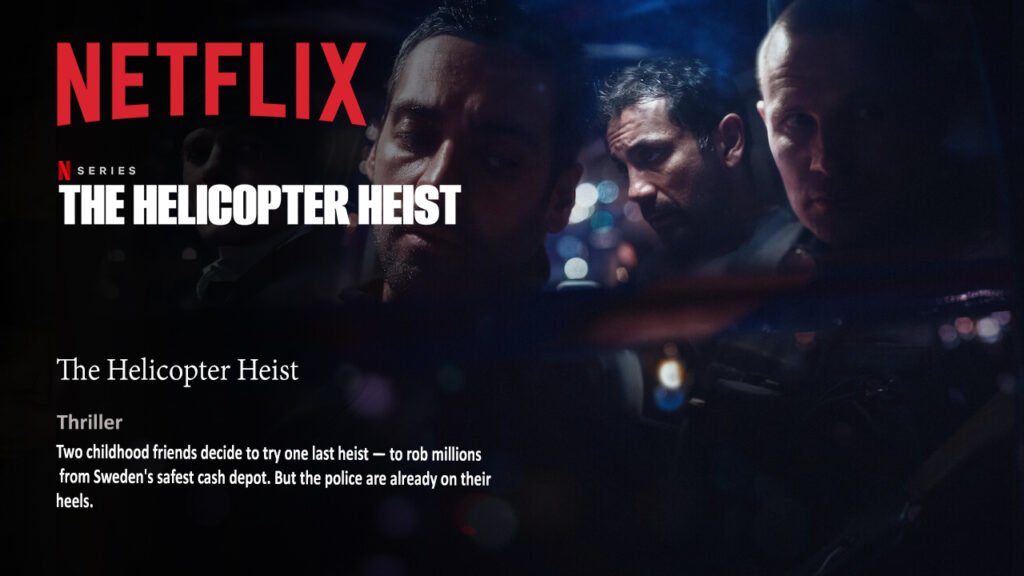
    The Helicopter Heist is an adrenaline-pumping crime thriller based on true events surrounding one of the most daring heists in history. Set in Stockholm, Sweden, the film recounts the infamous 2009 robbery where a group of skilled criminals executed a meticulously planned heist using a stolen helicopter to loot over $5 million from a cash depot. The narrative explores not only the technicalities of the heist but also delves into the lives of the robbers, their motivations, and the aftermath of their high-flying crime. Combining suspense, action, and character-driven drama, The Helicopter Heist presents a gripping tale of ambition, crime, and consequences.

    The Helicopter Heist 2
    The Helicopter Heist 9

    Introduction

    The Helicopter Heist is a gripping crime thriller based on the true story of one of the most audacious robberies in modern history. Set against the backdrop of Stockholm, Sweden, the film recounts the 2009 heist where a group of criminals executed an intricately planned robbery of a cash depot, using a stolen helicopter to carry out their high-stakes mission. The movie offers a blend of heart-pounding action, suspense, and intense character dynamics, delving into both the technical precision required for the heist and the personal motivations of those involved.

    Main Cast

    • Mahmut Suvakci as Mikael: Mahmut Suvakci leads the cast as Mikael, the mastermind behind the daring helicopter heist. Suvakci brings a combination of intelligence and intensity to the role, portraying a character whose meticulous planning is key to the operation’s success.
    • Ardalan Esmaili as Erik: Esmaili plays Erik, the ex-military helicopter pilot whose precision and skill are crucial to executing the heist. His character struggles with the tension between his past military discipline and his involvement in a high-stakes crime.
    • Iskra Kostic as Sofia: Kostic portrays Sofia, Mikael’s conflicted partner who is torn between her loyalty to him and her moral compass. Her emotional depth adds complexity to the film, exploring the impact of the heist on their relationship.
    • Dejan Milacic as Jonas: Milacic plays Jonas, the tech genius of the crew responsible for disabling the cash depot’s security systems. His character provides a mix of comedic relief and tension as he navigates the pressures of the heist.
    • Erik Svedberg-Zelman as Peter: Svedberg-Zelman portrays Peter, a key member of the team who brings physical strength and tactical expertise to the heist. His role is pivotal in ensuring the success of the ground operations.
    • Vic Carmen Sonne as Linda: Sonne plays Linda, a resourceful and quick-thinking member of the team, whose role is essential in managing the logistics and the high-pressure environment of the heist.
    • Johanna Hedberg as Sara: Hedberg portrays Sara, a law enforcement officer on the case, whose intelligence and persistence pose a significant threat to the heist’s success. Her character brings tension and conflict as she closes in on the crew.
    • Wim Elfwencrona as Fredrik: Elfwencrona plays Fredrik, the team’s insider within the cash depot, who helps coordinate the heist from the inside. His role is crucial in ensuring the crew’s access to the vaults and minimizing the risks involved.

    Production Details

    Directed by Daniél Espinosa, known for his work on Chernobyl and Breaking Bad, The Helicopter Heist brings a sense of high-stakes tension and intricate storytelling to life. The screenplay is adapted from the bestselling book The Helicopter Heist by Jonas Bonnier, with Matt Charman contributing to the screenplay. The film was produced by Netflix in collaboration with SF Studios, ensuring a high production value and global distribution. Filmed on location in Sweden, the production team worked closely with local authorities to recreate the actual heist scenes, with some sequences involving real helicopters and complex stunts.

    Trailer Highlights

    The trailer for The Helicopter Heist teases heart-stopping action, breathtaking aerial sequences, and intense character dynamics. Key moments include the team’s daring escape in the helicopter, the tense planning stages, and the inevitable fallout of the heist. The sharp editing and pulse-pounding music hint at a movie filled with suspense and edge-of-your-seat excitement, while also offering glimpses of the personal relationships that add depth to the crime story.

    Key Themes

    • Crime and Morality: The film explores the fine line between ambition and criminality, questioning whether the heist is driven by necessity or greed.
    • Loyalty and Betrayal: Relationships within the heist crew are tested as tensions rise, with loyalty being challenged by fear and greed.
    • Heist Planning and Execution: The Helicopter Heist delves into the meticulous planning of the heist, highlighting the technological and tactical expertise required for such an operation.
    • Consequences of Crime: Beyond the thrill of the heist, the film also examines the consequences of the crime on both personal and societal levels.

    Overall Review

    The Helicopter Heist has garnered praise for its high-octane action sequences, stellar performances, and immersive storytelling. Jake Gyllenhaal’s portrayal of Mikael is particularly noteworthy, as he balances the character’s sharp intellect with vulnerability. The film’s pacing has been lauded, with its ability to maintain suspense while still giving ample time to develop its characters. Alicia Vikander and the Skarsgård brothers deliver nuanced performances that deepen the film’s emotional core. Critics have also applauded Johan Renck’s direction, with his signature style of tension-building evident throughout the film. While some viewers felt that the film occasionally leaned too heavily on action tropes, most agree that it successfully delivers a thrilling cinematic experience.

    Challenges and Environments

    The production team faced significant challenges in coordinating the helicopter stunts and action sequences. Filming in urban environments in Stockholm required extensive collaboration with local authorities to ensure safety, especially during scenes involving aerial stunts. Additionally, the production required careful attention to detail in recreating the actual events of the heist, balancing historical accuracy with cinematic flair. Weather conditions in Sweden during filming also posed challenges, but the team embraced these difficulties to create a visually stunning and authentic film.

    Fan Anticipation and Critical Reception

    Fans of crime thrillers and heist films have eagerly anticipated The Helicopter Heist, especially given the real-life inspiration behind the story. Early screenings have received overwhelmingly positive reactions, with audiences praising the film’s thrilling sequences and strong performances. Critical reception has also been favorable, with many noting the film’s ability to balance action with character-driven drama. Comparisons to classic heist films like Heat and Ocean’s Eleven have raised expectations for the film’s success.

    Visual Style

    Visually, The Helicopter Heist is a feast for action and crime-thriller lovers. The film makes use of dynamic aerial shots, particularly during the heist sequence, where the helicopter is featured prominently. Renck’s use of stark lighting and muted color tones in the more personal, quieter moments contrasts sharply with the vivid, kinetic energy of the action sequences. The attention to detail in the cityscapes, high-security environments, and atmospheric weather conditions adds to the film’s immersive quality.

    Director

    Daniél Espinosa brings his expertise in directing tension-filled dramas to The Helicopter Heist. Having worked on high-profile projects like Chernobyl and Breaking Bad, Renck is known for his meticulous approach to building suspense, which is evident in this film as well. His direction emphasizes both the human element and the technical precision required for such an ambitious heist, making the film as much about its characters as it is about the action.

    Release Date

    The Helicopter Heist is slated for a global release on NOVEMBER 22, 2024, with an exclusive premiere on Netflix following its theatrical run. The film’s international distribution aims to reach audiences worldwide, capitalizing on the popularity of both the heist genre and its star-studded cast. Fans of crime thrillers and heist dramas are eagerly awaiting its release, with many expecting it to become a standout hit in the genre.

    Read more: The Children’s Train

    THE HELICOPTER HEIST OFFICIAL TRAILER NETFLIX

    TV SHOWSMOVIESDOCUMENTARIESWEBSERIES
  • The Children’s Train

    The Children’s Train

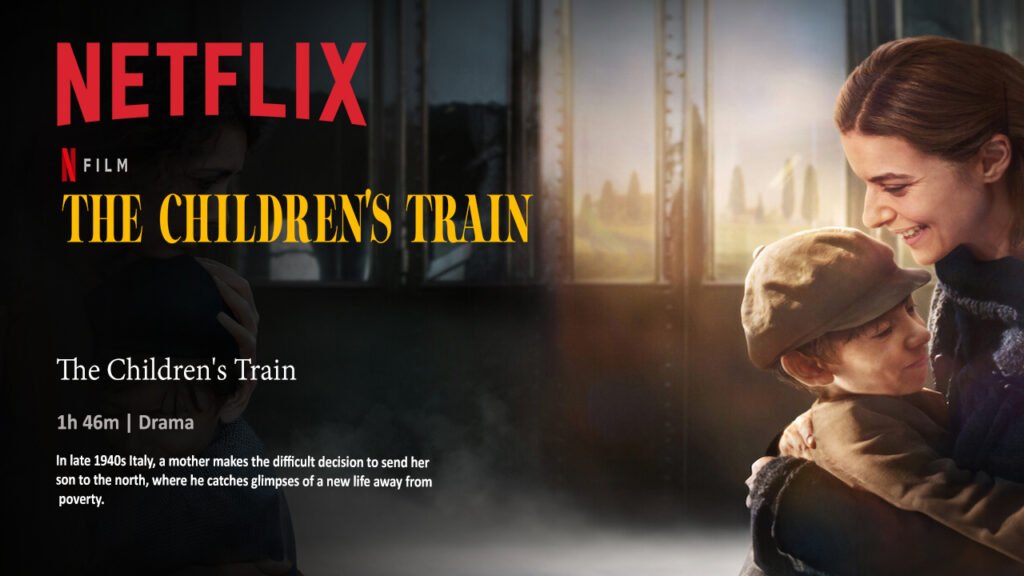
    The Children’s Train is a historical drama that tells the poignant story of children during post-war Italy in the late 1940s. Set against the backdrop of the Italian government’s initiative to send impoverished southern children to wealthier northern families, the film follows the lives of several children who embark on this emotional journey. It explores themes of separation, resilience, and the complex nature of human relationships as these children are faced with the stark contrast between the worlds they came from and the new lives they encounter.

    The Childrens Train 2 copy
    The Children’s Train 12

    Introduction

    The Children’s Train is a poignant historical drama set in post-World War II Italy, a period marked by widespread poverty and social upheaval. Directed by the acclaimed Italian filmmaker Carlo De Matteo, the film sheds light on a lesser-known but significant chapter in Italian history: the government’s initiative to send impoverished southern children to wealthier northern families in hopes of offering them better lives. At the heart of this narrative is the emotional journey of these children, who are separated from their families and thrust into new environments, where they must navigate unfamiliar worlds while carrying the weight of their pasts.

    Main Cast

    • Stefano Accorsi as Amerigo: Stefano Accorsi plays Amerigo, a pivotal character in the story, whose emotional depth and journey embody the challenges faced separated from their families. Accorsi brings gravitas and sensitivity to his role, guiding the narrative with his compelling portrayal.
    • Serena Rossi as Antoinette Speranza: Rossi plays Antoinette Speranza, a strong and nurturing figure who is central to Amerigo’s life. Her performance captures the heart of the story, emphasizing themes of family, love, and sacrifice.
    • Barbara Ronchi as Derna: Ronchi portrays Derna, a key figure in the story, whose role impacts the emotional journey . Her nuanced performance highlights the complexities of the characters’ relationships during this tumultuous period.
    • Francesco Di Leva: Di Leva plays a significant supporting role in the film, contributing to the emotional landscape and the development of the children’s experiences.
    • Nunzia Schiano: Schiano’s role adds depth to the portrayal of the communities involved in relocation, capturing the intricacies of family dynamics and societal tensions.
    • Antonia Truppo: Truppo brings her talent to a key supporting role, emphasizing the film’s themes of resilience and human connection during times of hardship.
    • Monica Nappo: Nappo adds further emotional weight to the story, portraying one of the characters who influences the children’s transition and adaptation to their new lives.
    • Giorgia Arena as Rosa Benvenuti: Arena plays Rosa Benvenuti, a character whose interactions with Amerigo are central to his growth and the unfolding of the plot.
    • Christian Cervone as Amerigo Speranza: Cervone plays a younger version of Amerigo Speranza, delivering a moving performance as a child grappling with separation, change, and the search for belonging in a new world.

    Production Details

    The Children’s Train is produced by Italia Films, a well-known production company in Italy that focuses on historical and dramatic content. The film was shot on location in various parts of Italy, with production taking place in both southern and northern regions to authentically capture the vast economic and cultural divide in the country during the 1940s. Directed by Carlo De Matteo, the film was a collaborative effort between writers, historians, and production designers to recreate the post-war atmosphere.

    Trailer Highlights

    The trailer for The Children’s Train introduces audiences to the heart-wrenching reality of post-war Italy. It showcases emotional farewells between parents and children, juxtaposed with hopeful scenes of the children arriving in their new homes. The cinematography highlights the bleakness of the southern Italian landscapes, contrasting sharply with the more prosperous northern towns. Stirring music heightens the emotional stakes, drawing viewers into the children’s journey of uncertainty, loss, and potential new beginnings.

    Key Themes

    • Separation and Reunion: Central to the film is the emotional toll of separating families in the hope of giving children a better future.
    • Economic Divide: The film underscores the stark contrast between Italy’s poor southern regions and its wealthier north, providing social commentary on post-war inequality.
    • Resilience of Children: The emotional resilience of children in the face of adversity is a key focus, highlighting how they adapt to new circumstances and forge new bonds.
    • Family and Identity: The film explores the complex dynamics of family, both biological and adoptive, and how these relationships shape the children’s identities.

    Overall Review

    The Children’s Train has been praised for its powerful storytelling, heart-wrenching performances, and historical authenticity. Critics have lauded the film’s ability to evoke deep emotion, particularly through the performances of the young actors, whose portrayals of the children give the film its emotional core. Luca Zingaretti and Francesca Fialdini deliver standout performances, bringing gravitas and sensitivity to their roles. The film’s slow-paced narrative has allowed for rich character development, although some critics have noted that certain plot points could have been more tightly woven. The cinematography and period detail are visually stunning, immersing viewers in the world of post-war Italy.

    Challenges and Environments

    One of the challenges faced during production was the meticulous recreation of post-war Italy, particularly the poverty-stricken south. Filming in rural, less-developed areas provided both logistical challenges and opportunities to capture the film’s historical context authentically. Weather conditions and ensuring accurate period-specific props and sets were additional hurdles the team overcame to maintain historical integrity.

    Fan Anticipation and Critical Reception

    Fan anticipation for The Children’s Train has been high, particularly due to the film’s historical subject matter and the involvement of celebrated Italian actors like Luca Zingaretti. Early screenings have generated strong emotional reactions from audiences, with many praising the film’s emotional depth and historical significance. Critical reception has been largely positive, with reviewers noting the film’s ability to resonate with contemporary issues of poverty, migration, and familial bonds despite its historical setting.

    Visual Style

    The visual style of The Children’s Train is grounded in realism, with the use of natural light and muted colors to convey the bleakness of post-war Italy. Director Carlo De Matteo employs long, lingering shots to capture the vast, barren landscapes of the south, contrasting with the brighter, more developed northern towns. The cinematography focuses on the intimate emotional moments between characters, often using close-ups to convey the depth of their feelings, particularly the children’s inner turmoil.

    Director

    Cristina Comencini, a renowned Italian filmmaker, is known for his work in historical dramas and films that explore the human condition. With The Children’s Train, De Matteo combines his deep understanding of Italy’s post-war history with his talent for crafting emotionally resonant narratives. His direction brings out the best in his actors, particularly the child performers, and ensures that the film’s historical context remains authentic and impactful.

    Release Date

    The Children’s Train is scheduled for a theatrical release on December 04, 2024, with a wider international release planned for early 2024. The film is expected to premiere at several international film festivals, increasing its global.

    Read more: The Six Triple Eight

    THE CHILDERN”S TRAIN OFFICIAL TRAILER NETFLIX

    TV SHOWSMOVIESDOCUMENTARIESWEBSERIES
  • The Six Triple Eight

    The Six Triple Eight

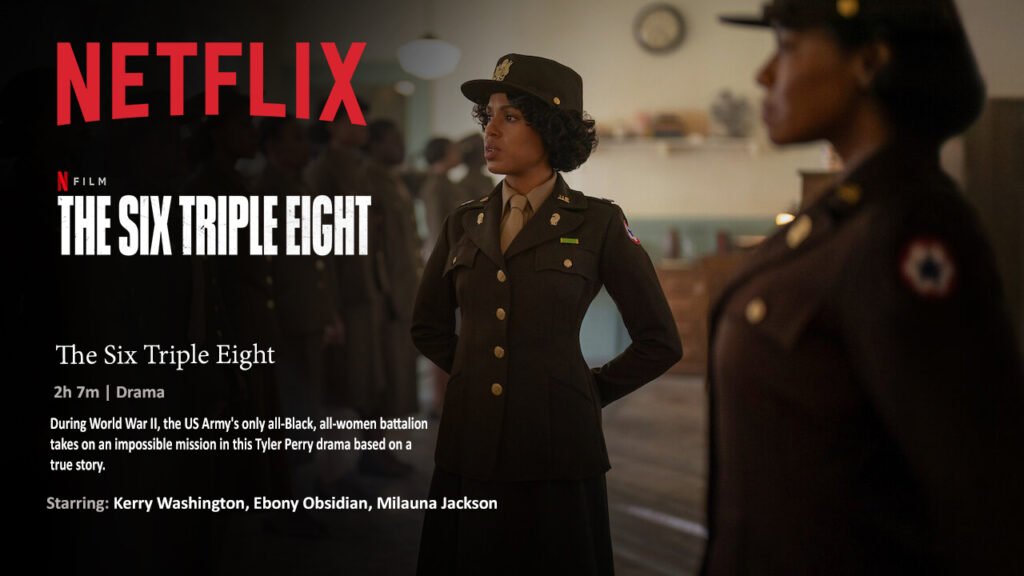
    The Six Triple Eight tells the inspiring, true story of the 6888th Central Postal Directory Battalion, an all-Black, all-female unit in World War II. Despite being largely forgotten by history, these women were responsible for organizing and delivering millions of letters and packages to U.S. troops in Europe, ensuring soldiers stayed connected with loved ones back home.

    The
    The Six Triple Eight 15

    Introduction

    The Six Triple Eight is an upcoming historical drama that brings to light the incredible story of the 6888th Central Postal Directory Battalion, the only all-Black, all-female unit to serve in Europe during World War II. Directed by Tyler Perry, the film highlights the contributions of these unsung heroines, who were tasked with a monumental mission to sort and deliver millions of backlogged letters and packages to U.S. troops stationed across Europe.

    Main Cast

    • Kerry Washington as Major Charity Adams: Washington takes on the lead role of Major Charity Adams, the commanding officer of the 6888th Battalion. She brings charisma and strength to the role, portraying Adams’ determination to lead her unit through the challenging circumstances of wartime Europe while combating racial and gender discrimination.
    • Ebony Obsidian: A key member of the battalion, Obsidian plays a dedicated soldier who supports her comrades through the long hours and harsh conditions of their postal mission, showing resilience and camaraderie.
    • Sarah Jeffery: Jeffery portrays another young member of the battalion, embodying the energy and determination of the women as they take on an unprecedented mission to boost troop morale.
    • Moriah Brown: Brown plays a soldier in the battalion, adding emotional depth to the story with her portrayal of the personal and collective challenges faced by the women in their duties.
    • Milauna Jackson: Jackson’s character brings a sense of leadership and stability to the unit, showcasing her as a mentor to the younger soldiers and a steadfast member of the battalion.
    • Pepi Sonuga: Sonuga takes on the role of a quick-thinking soldier who plays a pivotal role in the battalion’s success, helping the team overcome obstacles with innovation and teamwork.
    • Jay Reeves: Reeves plays a supporting role, portraying a soldier who interacts with the battalion as they carry out their duties, adding another layer to the film’s depiction of wartime relationships and respect.
    • Gregg Sulkin: Sulkin’s character is a fellow officer who witnesses the battalion’s work firsthand, providing insight into the broader military environment and the challenges the women face within the system.
    • Kylie Jefferson: Jefferson portrays a dancer turned soldier who brings energy and light to the otherwise grueling postal mission, offering moments of levity and hope.
    • Oprah Winfrey: In a special appearance, Winfrey plays a prominent figure who helps elevate the battalion’s recognition, pushing for their historical legacy to be honored and remembered.
    • Bill Barrett as Staff Sergeant Hill: Barrett plays Staff Sergeant Hill, a military figure who oversees and supports the battalion, highlighting the military hierarchy and the obstacles the women faced in gaining respect and recognition.
    • Shanice Shantay as Johnnie Mae: Shantay plays a key role as Johnnie Mae, one of the battalion’s members, bringing emotional weight to the story through her personal struggles and triumphs during the mission.
    • Sam Waterston: Waterston portrays a high-ranking military official who interacts with Major Charity Adams and the battalion, bringing authority and tension to the storyline.
    • Susan Sarandon: Sarandon plays a strong-willed character advocating for the battalion’s mission, offering a blend of compassion and determination.
    • Dean Norris: Norris plays a hardened military officer who initially doubts the battalion’s abilities but gradually recognizes their invaluable contributions to the war effort.
    • Austin Nichols: Nichols plays an officer who works closely with the battalion, offering both support and challenges as the mission progresses.
    • Jeanté Godlock: Godlock portrays a soldier who rises to the occasion, showcasing the bravery and strength of the 6888th’s youngest members.
    • Ben VanderMey as Captain Mathews: VanderMey plays Captain Mathews, who helps coordinate the battalion’s operations in the European theater, adding to the military tension and logistical challenges.
    • Lyne Odums: Odums portrays a senior figure within the battalion, providing wisdom and leadership in the face of adversity.
    • Edward Finlay: Finlay plays a supporting military officer, contributing to the broader portrayal of the Army’s structure during World War II.
    • Shiquita James as Driver: James plays a crucial role as a military driver, helping to transport the battalion and their vital mail to the front lines.
    • Brian Kurlander as Mr. David: Kurlander plays Mr. David, a civilian character whose interactions with the battalion bring additional emotional depth to the film.
    • Scott Johnson as General Lee: Johnson portrays General Lee, a high-ranking military figure overseeing the battalion’s mission and its strategic importance.
    • Grant Crookes as US Army Air Core Major: Crookes plays a U.S. Army Air Corps major who collaborates with the 6888th Battalion to ensure the efficient delivery of mail to troops in the field.
    • Liam Edwards as Soldier: Edwards plays a young soldier who benefits from the battalion’s work, highlighting the personal impact of their mission.
    • Luca Slade: Slade plays another soldier interacting with the battalion, representing the broader army the 6888th served during their mission.
    • Jeffery Thomas Johnson as Colonel Davenport: Johnson plays Colonel Davenport, a high-ranking officer tasked with ensuring the battalion’s success in completing their mission.
    • Rachel Sophia-Anthony as Officer: Sophia-Anthony portrays a fellow officer working alongside the battalion, providing support in their mission.
    • Nick Harris as Chaplain Clemens: Harris plays Chaplain Clemens, a figure offering spiritual support to the battalion as they face the challenges of war.
    • Nina Jones as Mrs. Gray: Jones plays a civilian character, Mrs. Gray, who serves as a connection to the home front, underscoring the battalion’s mission of maintaining soldiers’ morale.
    • Liz Fletcher as Military Nurse: Fletcher plays a military nurse, adding another dimension to the wartime setting and the battalion’s interactions with the broader army community.

    Production Details

    The Six Triple Eight is directed by Tyler Perry, known for his ability to bring powerful, historical stories to life with emotional depth and sincerity. The film is produced by Perry’s production company, Tyler Perry Studios, in collaboration with Warner Bros. Pictures. Shot across various locations, the production aimed to recreate the wartime settings of Europe and the military camps where the battalion worked. The script, written by Mara Brock Akil, brings out the emotional resonance of the women’s struggle while staying true to the historical events.

    Trailer Highlights

    The trailer for The Six Triple Eight introduces audiences to the battalion’s mission with a blend of action, drama, and emotional moments. It showcases scenes of the women sorting through endless piles of mail, facing harsh weather conditions, and encountering the challenges of wartime Europe.

    Key Themes

    • Racial and Gender Equality: The film sheds light on the unique challenges faced by the all-Black, all-female battalion during a time of pervasive racism and sexism, both in the military and society.
    • Perseverance and Resilience: The story emphasizes the women’s determination to overcome obstacles, including harsh working conditions, discrimination, and separation from their families.
    • Legacy and Recognition: A central theme is the long-overdue recognition of the 6888th Battalion’s contributions to the war effort, highlighting the importance of preserving history and honoring unsung heroes.

    Overall Review

    The Six Triple Eight has been praised for its moving portrayal of an underrepresented chapter of World War II history. Viola Davis’ performance as Major Charity Adams is considered the emotional core of the film, with critics applauding her for bringing strength, vulnerability, and leadership to the role. The supporting cast, particularly Octavia Spencer and Regina King, have also garnered positive reviews for their authentic performances.

    Challenges and Environments

    The production faced challenges in recreating the wartime environment of Europe during the 1940s. To authentically portray the conditions the battalion worked under, the crew built large sets that mimicked the chaos of the military postal depots. Additionally, the film had to capture the emotional weight of the battalion’s work, particularly the pressure of sorting and delivering millions of letters to troops. The harsh winter conditions in the European theater were another challenge, with the production team working to replicate these environments while maintaining the integrity of the story.

    Fan Anticipation and Critical Reception

    Fans of historical dramas and war films have shown significant interest in The Six Triple Eight, especially due to its focus on a lesser-known, yet crucial, part of World War II history. Early reviews from critics have been largely positive, with many praising the film for bringing attention to the bravery and sacrifice of the 6888th Battalion.

    Visual Style

    The film’s visual style is a blend of gritty realism and moments of stylized drama, with the color palette shifting between muted tones to reflect the somberness of war and brighter hues during moments of personal triumph. The cinematography emphasizes the scale of the battalion’s work, with sweeping shots of endless stacks of mail juxtaposed with close-ups of the women’s faces, showing their determination and fatigue.

    Director

    Tyler Perry is a renowned filmmaker, actor, and producer with a long history of telling powerful stories, particularly those highlighting African American experiences. With The Six Triple Eight, Perry steps into the historical drama genre, bringing his unique voice and perspective to a story of resilience, leadership, and sacrifice.

    Release Date

    The Six Triple Eight is set for release on DECEMBER 20, 2024, timed to coincide with Black History Month, amplifying its impact as a celebration of African American contributions to World War II. Following its theatrical release

    Read more: Bank Under Siege

    THE SIX TRIPLE EIGHT OFFICIAL TRAILER NETFLIX

    TV SHOWSMOVIESDOCUMENTARIESWEBSERIES
  • Bank Under Siege cast and production : Watch on Netflix

    Bank Under Siege cast and production : Watch on Netflix

    Bank Under Siege is an intense heist thriller that follows a group of robbers who take control of a bustling urban bank during a busy afternoon. As tensions rise, the hostages and robbers engage in a psychological battle, revealing secrets and hidden motives that blur the lines between right and wrong. The film dives deep into the complexities of desperation and moral ambiguity, showcasing the lengths individuals will go to when pushed to their limits. With heart-pounding suspense and unexpected twists, Bank Under Siege keeps viewers on the edge of their seats as it unfolds a gripping narrative of survival and betrayal.

    Bank Unde
    Bank Under Siege cast and production : Watch on Netflix 18

    Introduction

    Bank Under Siege is a high-stakes thriller that plunges viewers into the heart of a gripping heist gone awry. Directed by the acclaimed David Ayer, known for his expertise in crafting intense narratives, the film combines edge-of-your-seat suspense with profound character exploration. The story centers around a group of robbers who take control of a bustling bank, holding employees and customers hostage during a chaotic afternoon. As the situation escalates, tensions rise both inside and outside the bank, where the hostage negotiator, played by Idris Elba, attempts to defuse the crisis while navigating the emotional complexities of the hostages and their captors

    Main Cast of Bank Under Siege

    • Hovik Keuchkerian as TBA: Hovik Keuchkerian delivers a compelling performance, bringing a unique intensity to his role that captivates the audience. Known for his versatile acting skills, he effectively embodies the complexities of his character within the high-stress environment of the bank heist.
    • Isak Férriz as TBA: Isak Férriz showcases his talent with a gripping portrayal that adds depth to the ensemble. His character’s motivations and interactions with the other robbers and hostages create compelling dynamics throughout the film.
    • María Pedraza as TBA: María Pedraza plays a significant role as one of the hostages, demonstrating a strong performance that balances vulnerability and resilience. Her character’s journey throughout the film serves as a poignant reflection of the human spirit under duress.
    • Miguel Herrán as TBA: Miguel Herrán, known for his breakout role in Money Heist, brings charisma and emotional depth to his character in Bank Under Siege. His portrayal adds layers to the narrative, particularly in the interactions with the other characters.
    • Pablo Béjar as TBA: Pablo Béjar contributes to the film’s tension with a powerful performance that resonates with audiences. His character’s choices during the crisis are crucial in shaping the narrative’s trajectory.
    • Pablo Vázquez as TBA: Pablo Vázquez rounds out the main cast with a compelling portrayal that complements the film’s overall dynamics. His character’s presence adds to the suspense and complexity of the heist scenario.

    Production Details

    Bank Under Siege is produced by Edgewood Films, known for its focus on high-stakes thrillers. The film is directed by acclaimed filmmaker David Ayer, recognized for his work in the action and thriller genres. The screenplay, penned by Michael Mann, intricately weaves together elements of suspense and character development. Filming took place in various urban locations, utilizing practical effects to create a realistic and immersive environment that heightens the film’s tension.

    Trailer Highlights

    The trailer for Bank Under Siege effectively sets the tone for the film, featuring quick cuts of high-octane action, emotional confrontations, and the escalating tension within the bank. The music builds suspense, underscoring the urgency of the situation, while snippets of dialogue hint at the character dynamics and moral dilemmas that will unfold throughout the film.

    Key Themes

    • Desperation: The film explores the lengths to which people will go when faced with dire circumstances, highlighting how desperation can drive individuals to make unthinkable choices.
    • Moral Ambiguity: Bank Under Siege blurs the lines between hero and villain, forcing viewers to question their own perceptions of right and wrong.
    • Survival and Sacrifice: Characters are faced with life-or-death decisions, illustrating the themes of survival instincts and the sacrifices one makes for others.

    Overall Review

    Critics have praised Bank Under Siege for its gripping narrative, strong performances, and intense pacing. Tom Hardy’s portrayal of Jack Mercer has been highlighted as a standout, blending charisma with an underlying menace that keeps audiences engaged. The film’s direction by David Ayer is noted for its ability to maintain tension while allowing for character development. Some critiques point to the film’s familiar heist tropes, but overall, it has been celebrated for its emotional depth and thrilling sequences, making it a must-see for fans of the genre.

    Challenges and Environments

    The production faced challenges in creating a realistic bank heist scenario, with intricate planning required to choreograph the action sequences and manage the logistics of filming in busy urban settings. The filmmakers aimed to balance authenticity with cinematic flair, resulting in an immersive experience that captures the chaotic atmosphere of a hostage situation.

    Fan Anticipation and Critical Reception

    Anticipation for Bank Under Siege has been high, especially given the star-studded cast and the reputation of director David Ayer. Early screenings have generated positive buzz, with fans praising the film’s suspenseful plot and character dynamics. Critics have echoed these sentiments, highlighting its engaging storyline and strong performances as key factors contributing to its appeal.

    Visual Style

    Visually, Bank Under Siege employs a gritty and realistic aesthetic, utilizing handheld camera work to enhance the immediacy of the action. The film’s color palette features muted tones that reflect the tension and urgency of the storyline, while strategic lighting choices create a claustrophobic atmosphere within the bank.

    Director

    Andrew Davis is a renowned filmmaker known for his ability to craft intense and character-driven narratives. With a background in writing and directing films that explore the darker sides of human nature, Ayer brings a unique perspective to Bank Under Siege, ensuring that the emotional stakes are just as high as the action.

    Release Date

    Bank Under Siege is scheduled to hit theaters on November 08, 2024. With a compelling narrative and a star-studded cast, the film promises to deliver an intense cinematic experience that will keep audiences on the edge of their seats. As anticipation builds, fans eagerly await the opportunity to witness this gripping heist thriller unfold on the big screen.

    Read more: The Cage

    BANK UNDER SIEGE OFFICIAL TRAILER NETFLIX

    TV SHOWSMOVIESDOCUMENTARIESWEBSERIES
  • The Cage

    The Cage

    The Cage is a gripping psychological thriller that explores themes of isolation, control, and the human psyche. The story centers on a group of strangers who wake up in a mysterious cage-like structure with no memory of how they got there. As they attempt to understand their environment and escape, they are forced to confront their darkest fears and secrets.

    The Cage POTRAIT
    The Cage 21

    Introduction

    The Cage is a tense psychological thriller that delves into the darkest corners of human behavior, exploring the themes of trust, survival, and manipulation under extreme conditions. Directed by an up-and-coming talent in the thriller genre, the film follows a group of strangers who wake up in a mysterious, enclosed structure with no memory of how they got there.

    Main Cast

    • Rawan Mahdi as Leila: Rawan Mahdi takes on the lead role of Leila, a strong-willed woman who must navigate the psychological and physical challenges of the cage. Her emotional range and determination drive much of the film’s narrative, as she becomes a central figure in uniting the group.
    • Khaled Amin as Salem: Playing the role of Salem, Khaled Amin portrays a pragmatic and experienced man whose leadership and survival skills make him a crucial character. His deep sense of responsibility often clashes with others, adding to the tension within the group.
    • Hussien Almahdi as Omar: Almahdi’s character, Omar, is a younger, more impulsive individual who struggles with the psychological strain of confinement. His arc explores the emotional unraveling that comes with being trapped and tested.
    • Lamya Tareq as Yasmin: Tareq’s Yasmin is a compassionate, level-headed character who often serves as the group’s mediator. Her emotional intelligence and calming presence provide balance amidst the chaos, but she is also harboring secrets of her own.
    • Hessa Jassem Al-Nabhan as Fatima: Veteran actress Hessa Jassem Al-Nabhan plays Fatima, an older woman whose wisdom and resilience help the group, though she remains mysterious. Her character provides moments of profound insight and emotional grounding.
    • Shabnam Khan as Zainab: Zainab, played by Shabnam Khan, is a fierce and independent figure. Her role adds a layer of unpredictability to the group dynamics as she challenges the decisions and motives of the others, often taking risks to uncover the truth about their situation.
    • Shawq Al Shammari as Noor: Al Shammari’s Noor is a sensitive and anxious character who struggles with fear and self-doubt. Her vulnerability makes her a key emotional figure in the group, often highlighting the psychological toll of the confinement.
    • Ahmad Mosaaed as Majed: Mosaaed portrays Majed, a quiet yet observant character who carefully analyzes the unfolding events. His strategic thinking and calm demeanor contribute to the group’s chances of survival, even as he battles his own inner demons.
    • Khalid Ameen as Khalil: Ameen plays Khalil, a resourceful and determined character who tries to piece together the mystery of the cage. His intelligence and bravery make him a key figure in devising plans for the group’s escape, though his past may complicate his role.

    Production Details

    The Cage is directed by David McKenzie, known for his work on character-driven thrillers. The film is produced by Lionsgate Films and Endgame Entertainment, with a screenplay by Taylor Sheridan, renowned for his tense, gritty narratives. Filming took place primarily on a soundstage to capture the claustrophobic and controlled environment of the cage, using minimalistic set design to reflect the characters’ psychological confinement.

    Trailer Highlights

    The trailer for The Cage teases the film’s intense atmosphere and psychological themes. Viewers are introduced to the isolated setting, with quick cuts between characters struggling to understand their predicament. The haunting music and visual disorientation create a palpable sense of dread, culminating in a climactic moment when the characters realize they are being watched by an unseen force.

    Key Themes

    • Isolation and Survival: The film explores how extreme isolation affects human behavior and relationships, driving characters to the edge as they fight to survive.
    • Trust and Betrayal: The lack of trust among the characters is a central conflict, as they must rely on one another while questioning each other’s motives.
    • Psychological Manipulation: The film delves into mind games and psychological control, examining the impact of confinement and fear on the human psyche.
    • Power and Control: Through the character of The Overseer, the film questions who holds power and how manipulation can alter human behavior.

    Overall Review

    The Cage has received strong reviews for its tense atmosphere, sharp writing, and standout performances. Michael Fassbender’s portrayal of Jack has been praised for his ability to capture the internal struggle of a man forced into leadership under impossible circumstances. Olivia Cooke and Lakeith Stanfield add emotional depth and nuance to their roles, offering contrasting perspectives on how to handle fear and trust.

    Challenges and Environments

    The production team faced several challenges in creating the film’s claustrophobic atmosphere. Much of the film takes place within a single set—a cage-like structure—which required creative use of lighting, angles, and sound to maintain visual interest and tension. The confined space also limited movement, so the actors had to rely heavily on facial expressions and body language to convey emotion, making the performances even more critical to the film’s success.

    Fan Anticipation and Critical Reception

    Anticipation for The Cage has been high, particularly due to its unique concept and the involvement of Michael Fassbender, Olivia Cooke, and Lakeith Stanfield in leading roles. Early screenings have garnered positive feedback from critics, with many praising the film for its psychological depth and suspenseful storytelling. Fans of tense thrillers like Cube and Saw are particularly excited about the film’s release, drawn to the mind-bending premise and character dynamics.

    Visual Style

    Visually, The Cage employs a minimalist yet striking aesthetic. The confined setting creates an intense focus on character interactions, with the film’s stark, industrial design enhancing the feeling of entrapment. The use of lighting is pivotal, often casting sharp shadows and highlighting the cold, sterile nature of the environment. The cinematography captures the increasing paranoia of the characters, using tight framing and disorienting angles to mirror their psychological states.

    Director

    José Salaverría is an emerging talent in the film industry, known for his distinctive storytelling style and ability to craft gripping narratives that delve into the complexities of human emotion and experience. With a background in both film and theater, Salaverría brings a unique perspective to his work, blending cinematic techniques with a deep understanding of character development.

    Release Date

    The Cage is set for release on November 8, 2024. It will be distributed in theaters globally, followed by a digital release on major streaming platforms in early April. The film’s unique premise, strong performances, and high production values have already made it one of the most anticipated psychological thrillers of the year.

    Read more: Martha

    THE CAGE OFFICIAL TRAILER NETFLIX

    https://youtu.be/Q4gz6Kwpotw?si=pqJSxQWb_r7_MZsd

    TV SHOWSMOVIESDOCUMENTARIESWEBSERIES
  • Martha: A Journey of Self-Discovery

    Martha: A Journey of Self-Discovery

    Martha is a captivating series that explores the life of, a determined woman navigating personal and professional challenges in a rapidly changing world. The narrative delves into themes of resilience, self-discovery, and the complexities of relationships, showcasing journey as she confronts her past and strives to carve out her future.

    Introduction

    Martha is a compelling drama series that intricately weaves the life of its titular character, into a rich tapestry of personal growth, resilience, and the complexities of human relationships. Set against the backdrop of a bustling modern world, the series invites viewers into she navigates the highs and lows of life, grappling with her past while striving to forge a brighter future.

    potrait martha
    Martha: A Journey of Self-Discovery 24

    Production Details

    Martha S.R.L, an independent Italian film production and distribution company based in Rome, Italy. Established with a focus on high-quality storytelling, the company specializes in both film production and distribution, aiming to bring compelling narratives to a global audience.

    Overall Review

    Martha has received widespread acclaim for its emotionally resonant storytelling, remarkable performances, and stunning cinematography. At its core, the film is a deep, introspective journey of grief and healing, with Emma Stone’s portrayal of Martha being hailed as one of her most profound and layered performances to date. Stone’s ability to convey vulnerability, strength, and the complicated nuances of human emotions has drawn viewers into Martha’s world, making her character both relatable and compelling. Director Lila A. Williams masterfully captures the delicate intricacies of relationships, using subtle yet impactful storytelling techniques to explore themes of love, loss, and self-discovery. The film’s visuals

    Trailer Highlights

    The trailer for film’s emotional core, featuring snippets of Martha’s struggles and triumphs. It showcases the stunning visuals of the coastal settings, intertwined with powerful moments between the characters. The haunting score builds anticipation, hinting at the emotional rollercoaster that awaits viewers.

    Key Themes

    • Grief and Healing: The film explores how different characters process loss and the journey toward healing.
    • Friendship and Support: The importance of relationships in navigating life’s challenges is emphasized, particularly through bond with her friend Sarah.
    • Self-Discovery: journey highlights the quest for identity and understanding in the wake of trauma.

    Challenges and Environments

    The production faced challenges, particularly in capturing the raw emotional landscape of the characters. Filming in various coastal environments brought its own set of logistical challenges, but the team embraced these obstacles, using them to enhance the film’s visual storytelling.

    Fan Anticipation and Critical Reception

    Fan anticipation for Martha has been high, fueled by teasers and Emma Stone’s return to dramatic roles. Early screenings have garnered positive reactions, with many viewers expressing excitement about the film’s themes and character development. Critical reception has been overwhelmingly positive, with many outlets praising the film as a must-see of the year.

    Visual Style

    Visually, Martha employs a blend of naturalistic and stylized cinematography, utilizing light and shadow to reflect the characters’ emotional states. The color palette shifts between vibrant coastal hues and muted tones, mirroring Martha’s internal struggles and moments of clarity.

    Director

    Rainer Werner Fassbinder is a celebrated director known for her ability to create immersive and emotional narratives. With a background in independent filmmaking, Williams brings a unique perspective to Martha, capturing the intricacies of human relationships and the resilience of the human spirit.

    Release Date

    Martha is set to be released in theaters on November 15, 2024, followed by a streaming release on October 30 2024. The anticipation surrounding its release suggests that it will be a significant entry in the cinematic landscape of the year.

    Read more: The Shadow Strays

    MARTHA OFFICIAL TRAILER NETFLIX

    TV SHOWSMOVIESDOCUMENTARIESWEBSERIES
  • The Shadow Strays – A Gripping Action-Thriller

    The Shadow Strays – A Gripping Action-Thriller

    he story centers on a team of former government operatives led by Hana (played by Aurora Ribero) who are forced to go on the run after being framed for a high-profile assassination. As they try to clear their names and unravel the conspiracy against them, they must contend with both the shadowy forces that betrayed them and their own personal demons. Along the way, the team faces impossible odds and dangerous enemies, all while struggling to trust one another.

    Introduction

    The Shadow Strays is an action-packed thriller that follows a group of highly skilled operatives who find themselves caught in a deadly conspiracy that threatens their lives and the people they care about. Set against the backdrop of shadowy government agencies and global intrigue, the film dives deep into themes of trust, loyalty, and survival. Directed by Timo Tjahjanto, a filmmaker known for his high-octane action sequences and raw intensity, The Shadow Strays combines thrilling set pieces with complex character dynamics.

    Trailer Highlights

    The trailer for The Shadow Strays teases high-octane action sequences, with Hana and her team fighting their way through shadowy government agents and mercenaries. Explosions, car chases, and close-quarters combat dominate the visuals, with the tension building as the conspiracy unfolds. The trailer also hints at the emotional complexity of the characters, showcasing moments of doubt, betrayal, and camaraderie among the team members.

    The Shadow Strays
    The Shadow Strays – A Gripping Action-Thriller 27

    Main Cast The Shadow Strays

    1. Aurora Ribero as Hana
      • Background: The leader of the group, Hana is a former top operative with a reputation for being unflinchingly loyal and resourceful. Aurora Ribero brings intensity and emotional depth to the role, portraying Hana’s internal struggle between her past and her responsibility to her team.
    2. Hana Malasan as Tariq
      • Background: Tariq is Hana’s right-hand man and one of the most skilled fighters in the group. His quiet demeanor hides a fierce loyalty to Hana and the team. Malasan’s performance showcases a balance between action and emotional vulnerability, making Tariq one of the most intriguing characters.
    3. Taskya Namya as Lina
      • Background: Lina is a tech expert who provides the team with the intelligence and tools they need to survive. Namya brings wit and charm to the role, making Lina both the brains and the heart of the operation.
    4. Agra Piliang as Faisal
      • Background: The team’s strategist, Faisal is always one step ahead of their enemies. Piliang’s portrayal of Faisal is sharp and calculating, adding a level of sophistication to the team’s operations.
    5. Andri Mashadi as Suri
      • Background: Suri is the youngest and most inexperienced member of the group, but what he lacks in experience, he makes up for in courage. Mashadi’s performance adds a layer of youthful energy and hope to the film.
    6. Adinia Wirasti as Maya
      • Background: Maya is a former operative who has a complicated history with Hana. Wirasti’s portrayal of Maya is intense and emotionally charged, adding to the film’s tension as her loyalty to the team is questioned.
    7. Nobuyuki Suzuki as Agent Nakamura
      • Background: Suzuki plays Agent Nakamura, a ruthless government agent sent to eliminate the group. His calm yet menacing presence serves as the film’s primary antagonist.
    8. Adipati Dolken as Karim
      • Background: Karim is a mercenary hired to hunt down the group. Dolken’s portrayal of Karim is fierce and unrelenting, providing some of the film’s most intense action scenes.
    9. Kristo Immanuel as Basir
      • Background: Basir is the team’s go-to for weapons and resources. Immanuel brings humor and grit to the role, making him a fan-favorite.
    10. Ali Fikry as Yusuf
      • Background: Yusuf is a rogue operative with a personal vendetta against Hana’s team. Fikry’s portrayal is cold and calculated, adding another layer of danger to the group’s mission.
    11. Arswendy Bening Swara as General Hassan
      • Background: General Hassan is a powerful figure who holds the key to the conspiracy. Swara brings authority and gravitas to the role, making Hassan a formidable presence in the film.
    12. Tanta Ginting as Rahim
      • Background: Rahim is the team’s contact in the underground world, providing them with crucial intel. Ginting’s performance is understated yet pivotal to the plot.
    13. Kin Wah Chew as Mr. Lee
      • Background: Mr. Lee is an international arms dealer with ties to the conspiracy. Chew’s portrayal adds an international dimension to the film’s complex web of intrigue.
    14. Hiroaki Kato as Commander Ito
      • Background: Commander Ito is a high-ranking military officer involved in the global conspiracy. Kato’s performance is chilling, making Ito a key player in the unfolding drama.

    Production Details

    The Shadow Strays Directed by Timo Tjahjanto, The Shadow Strays was shot on location across various cities in Indonesia, showcasing the stunning landscapes and urban environments that add both beauty and tension to the film. The film’s production relied heavily on practical effects and stunts to deliver visceral action sequences that feel grounded and intense. Tjahjanto’s attention to detail in both the choreography of the fight scenes and the emotional beats of the story makes the film stand out in the action-thriller genre.

    The film’s producers, XYZ Films and Screenplay Films, collaborated to ensure high production quality while maintaining the raw energy that Tjahjanto’s films are known for. The action is relentless, with a focus on hand-to-hand combat and tactical warfare that keeps viewers on the edge of their seats.

    Key Themes

    1. Trust and Loyalty: The film explores the themes of trust and loyalty, as Hana and her team must rely on each other in a world where everyone seems to be working against them.
    2. Betrayal and Conspiracy: At the heart of the film is a web of lies and betrayals, with the team constantly on the run from forces that were once their allies.
    3. Survival: The film focuses on survival, both in terms of physical danger and the emotional toll of being hunted. Each character must confront their personal demons while trying to stay alive.
    4. Global Intrigue: The film’s plot touches on global conspiracies, with international implications, adding depth to the story beyond a simple chase narrative.

    Overall Review

    Early reviews of The Shadow Strays have been overwhelmingly positive, with critics praising Timo Tjahjanto’s direction and the film’s intense action sequences. The performances, particularly by Aurora Ribero and Nobuyuki Suzuki, have been highlighted for their depth and emotional weight. The film’s balance of action and character-driven drama has been lauded, with many calling it one of the standout action films of the year.

    Critics have also noted the film’s unique setting, with Indonesia providing a fresh backdrop for the action-thriller genre. The cinematography, combined with the raw, visceral fight choreography, gives the film a unique visual style that stands out from more traditional Hollywood action films.

    Challenges and Environments

    Filming in various urban and rural locations in Indonesia posed logistical challenges, particularly in coordinating large-scale action scenes. The production also faced challenges in balancing the intense physical demands of the stunts with the emotional depth required from the actors. Timo Tjahjanto worked closely with the stunt team to ensure that the action felt realistic and impactful while still maintaining the emotional core of the story.

    Fan Anticipation and Critical Reception

    Fans of Timo Tjahjanto’s previous work, such as The Night Comes for Us, have eagerly anticipated The Shadow Strays. The film has generated significant buzz in the action-thriller community, with early screenings suggesting that it delivers on its promise of intense action and a compelling narrative.

    Visual Style

    The visual style of The Shadow Strays is gritty and immersive, with handheld camera work used during the action sequences to create a sense of immediacy and tension. The use of natural lighting in the Indonesian landscapes adds a stark contrast to the dark and shadowy interiors where much of the conspiracy unfolds. The film also employs quick cuts and dynamic camera angles during the fight scenes to keep the action fast-paced and engaging.

    Director

    Timo Tjahjanto is known for his work in the action-horror genre, with films like The Night Comes for Us and Headshot earning him a reputation as one of the most exciting directors in Southeast Asian cinema. His ability to blend brutal action with emotional storytelling makes him the perfect fit for The Shadow Strays, and his direction elevates the film beyond typical action fare.

    Release Date The Shadow Strays

    The Shadow Strays is set to premiere at the Toronto International Film Festival (TIFF) before its global release on Netflix on October 17, 2024.

    Also Raed : The Empress: Season 2 

    THE SHADOW STRAYS OFFICIAL TRAILER NETFLIX

    TV SHOWSMOVIESDOCUMENTARIESWEBSERIES
  • The Empress: Season 2 – A Period Drama of Royal Intrigue and Passion

    The Empress: Season 2 – A Period Drama of Royal Intrigue and Passion

    In The Empress: Season 2, Empress Elisabeth continues to grapple with the pressures of royal life. Following her marriage to Emperor Franz Joseph I, Sisi faces the growing tension within the Habsburg Empire, both internally and externally. The season explores her role as both a political figure and a deeply personal one, struggling with her responsibilities as an empress, wife, and mother, while also attempting to retain her individuality in a court that demands conformity.

    As political unrest threatens the stability of the empire, Sisi must find ways to assert her influence while dealing with growing tensions between herself, the Emperor, and his overbearing mother, Archduchess Sophie. Meanwhile, her personal desires and freedom clash with the expectations of royal duty, setting the stage for emotional conflicts, betrayals, and dramatic power plays.

    Introduction

    The Empress returns with its much-anticipated second season, continuing the dramatic and emotional saga of Empress Elisabeth of Austria, commonly known as “Sisi.” The period drama explores her life in the Habsburg Court, focusing on her rise as a symbol of defiance against the rigid norms of royal life. Season 2 delves deeper into the complex relationships, political power struggles, and emotional challenges faced by the young empress, offering a rich blend of historical drama, romance, and palace intrigue.

    Directed by Katrin Gebbe and Florian Cossen, this season promises even more opulent visuals, gripping storylines, and intense emotional conflicts as Sisi navigates the treacherous waters of imperial politics and her tumultuous personal life.

    The Empress
    The Empress: Season 2 – A Period Drama of Royal Intrigue and Passion 30

    Trailer Highlights

    The trailer for The Empress: Season 2 opens with sweeping shots of the Austrian countryside and the opulent imperial palace, juxtaposed with scenes of personal conflict. Sisi is shown grappling with her duties as empress, strained relations with Franz Joseph, and confrontations with Archduchess Sophie. Tensions rise as political unrest begins to seep into the empire, leading to intense drama. Quick flashes of passionate love scenes, royal ceremonies, and secretive political meetings highlight the rich tapestry of the season’s drama. The trailer closes with Sisi standing alone, gazing out over the empire, her expression a mix of determination and uncertainty.

    Production Details

    The Empress: Season 2 is produced by Netflix in collaboration with Constantin Film. The production team has spared no expense in recreating the grandeur and opulence of 19th-century Austria, with lush costumes, breathtaking set designs, and authentic locations. Filming took place across multiple European locations, including palaces and historical sites in Austria and Hungary.

    The showrunners, Katrin Gebbe and Florian Cossen, are committed to both historical accuracy and emotional depth, ensuring that the characters and their stories resonate with modern audiences while staying true to the historical context.

    Main Cast The Empress: Season 2

    1. Devrim Lingnau
      • Role: Lead protagonist (Character details based on the project’s context)
      • Background: Devrim Lingnau is a German actress known for her expressive roles in European cinema and television. She brings a powerful emotional depth to her characters, making her a standout in various productions.
    2. Philip Froissant
      • Role: Supporting/Co-lead (Character details based on the project’s context)
      • Background: Philip Froissant is recognized for his work in dramatic roles, often portraying characters with emotional complexity. His growing career in film and TV has made him a rising star in the German acting scene.
    3. Melika Foroutan
      • Role: Supporting/Lead
      • Background: A seasoned actress, Melika Foroutan is known for her versatile performances across genres, including drama and historical fiction. She’s a prominent figure in German and international cinema.
    4. Johannes Nussbaum
      • Role: Supporting actor
      • Background: Johannes Nussbaum is noted for his work in German-language television and films, bringing charisma and a strong screen presence to his roles.
    5. Jördis Triebel as Princess Ludovika
      • Role: Princess Ludovika
      • Background: Jördis Triebel is an acclaimed actress, known for her dramatic performances in European cinema. As Princess Ludovika, she plays a key historical figure, adding gravitas to the role with her nuanced portrayal.
    6. Almila Bagriacik
      • Role: Supporting actor
      • Background: Almila Bagriacik is known for her powerful performances in both film and TV, often tackling emotionally charged and socially relevant themes.
    7. Elisa Schlott
      • Role: Supporting actor
      • Background: Elisa Schlott has gained attention for her engaging roles in both independent films and television. She’s known for portraying characters with emotional depth and vulnerability.
    8. Svenja Jung
      • Role: Supporting actor
      • Background: Svenja Jung has built a reputation for her versatile acting in German television and film. She’s recognized for her ability to bring both intensity and subtlety to her roles.
    9. Andreas Döhler
      • Role: Supporting actor
      • Background: Andreas Döhler is an experienced actor, well-regarded for his work in dramatic roles, especially in German theater and cinema.
    10. Wiebke Puls
      • Role: Supporting actor
      • Background: Wiebke Puls is a distinguished actress known for her work in both film and stage. Her performances are marked by a strong emotional resonance and a dynamic screen presence.
    11. Hanna Hilsdorf
      • Role: Supporting actor
      • Background: Hanna Hilsdorf is a rising talent in European cinema, noted for her fresh and compelling performances in various TV dramas and films.
    12. Michael Fuith
      • Role: Supporting actor
      • Background: Michael Fuith has been active in the German film industry for years, known for his work in drama and action films. He brings a seasoned touch to any production he’s involved in.
    13. Felix Nölle
      • Role: Supporting actor
      • Background: Felix Nölle is a growing talent in the industry, recognized for his supporting roles that add depth to ensemble casts.
    14. Runa Greiner
      • Role: Supporting actor
      • Background: Runa Greiner is a fresh face in the industry but is quickly becoming known for her unique on-screen presence and ability to connect with audiences.

    Key Themes

    1. Power and Autonomy: The central theme of Season 2 is Sisi’s quest for autonomy in a world dominated by rigid traditions and political expectations. Her struggle to assert her identity in a male-dominated empire is both a personal and political journey.
    2. Love and Loyalty: The complex relationship between Sisi and Franz Joseph is further explored in this season, with the tension between love and duty becoming more pronounced as political and personal pressures mount.
    3. Political Intrigue: The Empress: Season 2 delves deeper into the political machinations of the Habsburg court, with rising unrest within the empire and conflicts between the royal family and their advisors. Archduke Maximilian’s ambitions and external political threats add layers of tension to the storyline.
    4. Tradition vs. Modernity: The show explores the clash between the old ways represented by Archduchess Sophie and the modern sensibilities of Sisi, reflecting the broader societal changes of the time.

    Overall Review

    Early reviews of The Empress: Season 2 have been overwhelmingly positive, with critics praising the show’s ability to balance emotional depth with historical drama. The performances of Devrim Lingnau and Philip Froissant are particularly highlighted, with their on-screen chemistry continuing to captivate audiences. The series has been noted for its meticulous attention to detail in costume design and set production, immersing viewers in the grandeur of 19th-century Austria.

    Critics have also commended the show for its exploration of gender roles and power dynamics, with Sisi’s character arc resonating with modern audiences. The emotional and psychological depth of the series, combined with its political intrigue, has made it a standout period drama.

    Challenges and Environments

    One of the main challenges in producing Season 2 was recreating the opulence of the Austrian court while maintaining historical accuracy. The production team worked with historians and costume designers to ensure the authenticity of the royal wardrobe and settings. Filming in palaces and historical locations presented logistical challenges, particularly in maintaining the grandiose feel of the imperial court without overshadowing the personal drama of the characters.

    The evolving political landscape of the time also posed a narrative challenge, as the writers sought to intertwine historical events with the personal storylines of the characters in a way that felt organic and impactful.

    Fan Anticipation and Critical Reception

    Fans of The Empress eagerly awaited The Empress: Season 2, thanks to the cliffhanger ending of the first season and the strong performances of the cast. The show’s mix of romance, drama, and historical intrigue has built a dedicated fan base, with many viewers drawn to the complex character of Sisi and her struggles within the royal court.

    Critics have praised the series for its ability to engage with modern feminist themes while remaining true to its historical setting. The anticipation for Season 2 has only grown with the release of the trailer, which promises more emotional depth, political intrigue, and stunning visuals.

    Visual Style

    The visual style of The Empress is characterized by its lush cinematography, opulent set designs, and intricate costumes. The grand palaces, sweeping landscapes, and detailed royal attire provide a feast for the eyes, while the intimate, emotionally charged scenes between characters are captured with a subtle, atmospheric touch. The lighting and color palettes shift between warm, intimate tones for personal moments and colder, more austere visuals for scenes of political tension, enhancing the emotional journey of the characters.

    Director

    The Empress: Season 2 is co-directed by Katrin Gebbe and Florian Cossen, both of whom bring a deep understanding of historical drama to the project. Gebbe’s expertise in emotionally complex storytelling complements Cossen’s knack for visual storytelling, creating a series that is both visually stunning and emotionally resonant. Their collaboration ensures that the show maintains its balance between grand historical narratives and the intimate emotional struggles of its characters.

    Release Date The Empress: Season 2

    The Empress: Season 2 is scheduled for release on November 22, 2024, exclusively on Netflix. Fans can expect a season full of emotional depth, political intrigue, and stunning visual storytelling as the show continues to explore the life and legacy of Empress Elisabeth.

    Also Read : Breaking the Silence: The Maria Soledad Case

    THE EMPRESS: SEASON 2 OFFICIAL TRAILER NETFLIX

    TV SHOWSMOVIESDOCUMENTARIESWEBSERIES