Tag: Italian historical drama

  • The Law According to Lidia Poët: Season 2 – A Riveting Historical Drama

    The Law According to Lidia Poët: Season 2 – A Riveting Historical Drama

    Introduction

    The Law According to Lidia Poët: Season 2 marks the return of Italy’s first female lawyer as she continues to fight for justice in a world that often tries to shut her out. Set in late 19th-century Turin, this historical drama follows Lidia Poët as she faces new legal challenges, personal conflicts, and societal barriers in her quest for gender equality. With a mix of courtroom drama, personal intrigue, and historical accuracy, Season 2 delves deeper into Lidia’s journey as she balances her passion for the law with the complexities of her personal life. Starring Matilda De Angelis as the determined and brilliant Lidia, this Netflix original is set to captivate audiences with its compelling blend of history, justice.

    Plot Summary

    The Law According to Lidia Poët: Season 2 continues the story of Lidia Poët, Italy’s first female lawyer, who battles for her rightful place in a male-dominated legal system. Set in late 19th-century Turin, the second season explores Lidia’s ongoing legal challenges as she defends the rights of her clients while fighting for women’s equality in the courtroom. As Lidia continues to defy societal norms and navigate the intricacies of Italy’s legal system, she uncovers new mysteries, faces dangerous adversaries, and makes personal sacrifices for justice. In this season, Lidia’s battles extend beyond the courtroom as she grapples with her own evolving personal life and the larger societal impact of her work.

    Lidia Poët
    The Law According to Lidia Poët: Season 2 – A Riveting Historical Drama 3

    Main Cast Full Details for The Law According to Lidia Poët: Season 2

    1. Matilda De Angelis as Lidia Poët
      • Background: Matilda De Angelis leads the cast as Lidia Poët, Italy’s first female lawyer. Known for her compelling performances in both film and television, De Angelis brings depth, strength, and vulnerability to the character, portraying Lidia’s struggle for justice in a male-dominated world. Her portrayal of Lidia showcases a woman ahead of her time, fighting for women’s rights while balancing personal and professional challenges.
    2. Eduardo Scarpetta as Jacopo Poët
      • Background: Eduardo Scarpetta plays Jacopo Poët, Lidia’s supportive brother who works as a journalist. Jacopo is a key ally in Lidia’s fight for equality and justice, often helping her gather critical information for her cases. Scarpetta’s performance highlights the bond between the siblings and the role Jacopo plays in Lidia’s legal career and personal life.
    3. Pier Luigi Pasino as Enrico Poët
      • Background: Pier Luigi Pasino portrays Enrico Poët, Lidia’s older brother and a well-established lawyer. Although he loves and respects Lidia, Enrico is conflicted by her ambition to break societal norms. He often represents the conservative views of the time, and his relationship with Lidia brings tension and depth to the storyline.
    4. Sara Lazzaro as Teresa Barberis
      • Background: Sara Lazzaro plays Teresa Barberis, Lidia’s close friend and confidante. As a schoolteacher, Teresa shares Lidia’s progressive views on women’s rights and often supports Lidia both emotionally and intellectually. Lazzaro’s portrayal emphasizes the importance of friendship and solidarity in Lidia’s life.
    5. Dario Aita as Andrea Caracciolo
      • Background: Dario Aita plays Andrea Caracciolo, Lidia’s love interest and fellow lawyer. Aita’s character, Andrea, is impressed by Lidia’s legal prowess, and their relationship evolves as they work together. Their romantic entanglement adds complexity to both their personal and professional lives.
    6. Sinead Thornhill as Miss Thornhill
      • Background: Sinead Thornhill portrays Miss Thornhill, a new character in Season 2 who represents the growing influence of international perspectives on Lidia’s work. Miss Thornhill brings a fresh dynamic to the cast, adding layers of intrigue and challenge for Lidia.
    7. Andrea Caracciolo as Himself
      • Background: Andrea Caracciolo plays a pivotal role in the legal and personal life of Lidia Poët, as both a fellow lawyer and romantic partner. His character challenges Lidia both professionally and personally, and their relationship becomes a core part of the season’s narrative.
    8. Guido Iuculano as Supporting Role
      • Background: Guido Iuculano contributes to The Law According to Lidia Poët: Season 2 with a strong supporting role that intertwines with Lidia’s legal battles. Though details on his character are limited, Iuculano’s presence adds complexity to the courtroom drama.
    9. Matteo Rovere as Director
      • Background: Matteo Rovere serves as the director of the series, bringing his expertise in historical storytelling and character-driven narratives to the show. Rovere’s direction adds depth and authenticity to the portrayal of 19th-century Turin and the challenges faced by women in the legal profession.

    Additional Cast Members:

    • Enrico Poët (Pier Luigi Pasino): Enrico is Lidia’s brother, a respected lawyer with conservative views, often representing the obstacles Lidia faces in pursuing her legal career.

    This comprehensive cast breakdown reflects the key roles in The Law According to Lidia Poët: Season 2 and the rich dynamics between the characters, focusing on the historical and emotional depth of the series.

    Production Details

    The Law According to Lidia Poët: Season 2 is produced by Matilde and Luca Bernabei of Lux Vide, a leading Italian production company known for producing high-quality period dramas. The show is a Netflix original, co-produced with Rai Fiction. The production team aimed to maintain historical accuracy, carefully designing the sets and costumes to reflect late 19th-century Turin.

    The show’s richly detailed set pieces transport viewers into Italy’s legal and social world of the time. Season 2 features new locations, including more detailed depictions of courtrooms, libraries, and salons where influential decisions are made. The vibrant visual style complements the depth of the storytelling, adding a sense of authenticity to the period setting.

    Trailer Highlights

    The trailer for Season 2 teases a more intense and emotional season, focusing on Lidia’s growing influence in the legal world and the new obstacles she must overcome. The trailer highlights Lidia’s fierce courtroom battles, as well as the challenges she faces in her personal life, particularly her evolving relationship with Andrea Caracciolo. Key moments of tension, suspense, and drama are showcased, promising a season filled with twists, legal intrigue, and emotional depth.

    Key Themes

    • Gender Equality and Women’s Rights: As in the first season, the fight for gender equality remains a central theme in Season 2. Lidia’s struggles to be accepted in a male-dominated legal profession highlight the systemic barriers women faced in the 19th century.
    • Justice and Morality: Lidia’s cases often raise questions about justice, morality, and how laws can be manipulated for personal gain. The series delves into the moral complexities of the legal system, questioning how justice is served.
    • Personal Sacrifice: Lidia continues to face personal sacrifices in her pursuit of justice. Her relationships with her family, friends, and romantic partner are often strained as she dedicates herself to her work, raising questions about the balance between personal life and professional ambition.

    Overall Review

    The Law According to Lidia Poët: Season 2 has received early praise for its compelling storytelling, strong performances, and its nuanced portrayal of legal and social issues. Matilda De Angelis’ portrayal of Lidia has been singled out as a highlight of the series, with critics noting her ability to capture both the intensity and vulnerability of the character. The show’s exploration of gender equality in the legal system, combined with its historical setting, gives it a unique place in the period drama genre.

    The pacing of the season has been praised for its balance between courtroom drama and personal storylines, ensuring that the legal battles are both engaging and emotionally impactful. The show’s historical accuracy, combined with modern themes of justice and gender equality, has made it a standout among Netflix’s international offerings.

    Challenges and Environments

    One of the main challenges faced by the production team was maintaining historical accuracy while also making the show accessible to modern audiences. The legal system of 19th-century Italy is complex, and the writers worked to ensure that legal jargon and proceedings were understandable without losing authenticity. Filming in real historical locations in Turin also presented challenges, as the production had to work around limitations to maintain the integrity of the settings.

    Balancing the personal and professional aspects of Lidia’s life was another challenge. The writers and directors worked to ensure that Lidia’s personal struggles felt as authentic and engaging as her legal battles, giving her character depth and relatability.

    Fan Anticipation and Critical Reception

    Fans of the first season have eagerly anticipated the return of Lidia Poët, especially given the cliffhanger ending of Season 1. Early reviews suggest that Season 2 lives up to expectations, with audiences praising the character development, courtroom drama, and historical detail. Critics have noted that the second season dives deeper into the complexities of Lidia’s relationships, adding new emotional layers to the story.

    Visual Style

    The visual style of The Law According to Lidia Poët: Season 2 remains one of its strongest aspects. The cinematography captures the beauty of 19th-century Turin, with lush period details and an elegant color palette that reflects the grandeur of the time. The use of natural light and shadow enhances the mood of the series, particularly in the courtroom scenes where Lidia faces her opponents. The costume design is intricate, reflecting both the fashion of the time and the characters’ social statuses, further immersing viewers in the world of the series.

    Director Introduction

    Season 2 is directed by Matteo Rovere, known for his work on historical dramas. Rovere brings a meticulous attention to detail and a passion for character-driven storytelling, which is evident in how he handles both the courtroom sequences and the more intimate personal moments in the series. Rovere’s direction strikes a balance between historical accuracy and dramatic tension, ensuring that the audience remains emotionally engaged with Lidia’s journey.

    Release Date

    The Law According to Lidia Poët: Season 2 is set to premiere on October 30, 2024, exclusively on Netflix. Fans of historical dramas and courtroom intrigue can look forward to the return of Italy’s first female lawyer as she takes on new challenges in her fight for justice and equality. Mark your calendars for this exciting continuation of Lidia Poët’s journey.

    Also Raed : Ancient Apocalypse: The Americas

    THE LAW ACCORDING TO LIDIA POET: SEASON 2 OFFICIAL TRAILER NETFLIX

    TV SHOWSMOVIESDOCUMENTARIESWEBSERIES

  • Revisiting Boccaccio: ‘The Decameron’ Film Adaptation Premieres with Fresh Insights and Modern Twists

    Revisiting Boccaccio: ‘The Decameron’ Film Adaptation Premieres with Fresh Insights and Modern Twists

    Introduction

    The Decameron,” a timeless collection of novellas by Giovanni Boccaccio, has been reimagined for a contemporary audience in this latest film adaptation. Set against the backdrop of a 14th-century Italian city grappling with the Black Death, this adaptation brings to life the tales of ten young Florentines who escape the plague by retreating to a secluded villa. Over ten days, each character tells a story, resulting in a tapestry of narratives that explore themes of love, tragedy, wit, and morality. This new cinematic version aims to capture the essence of Boccaccio’s work while resonating with modern viewers through relevant themes and diverse storytelling.

    Cast

    The film boasts an ensemble cast that embodies the vibrant and eclectic characters of Boccaccio’s original work:

    • Emma Thompson stars as Pampinea, the unofficial leader of the group, who organizes the storytelling retreat.
    • Dev Patel plays Panfilo, a young storyteller with a penchant for tales of adventure and romance.
    • Zoe Kravitz appears as Fiammetta, who narrates stories of passion and deceit.
    • The cast also includes emerging talents such as Tom Holland as Dioneo, known for his provocative and often humorous stories.

    Release On Netflix

    The Decameron” is set to captivate audiences with its modern cinematic adaptation, premiering on July 25th. This anticipated release will bring Giovanni Boccaccio’s timeless tales to life, exploring deep themes of human nature, love, and resilience against the backdrop of 14th-century Italy. Mark your calendars for a journey into the heart of storytelling, where the past and present converge in a visually stunning and emotionally charged film experience.

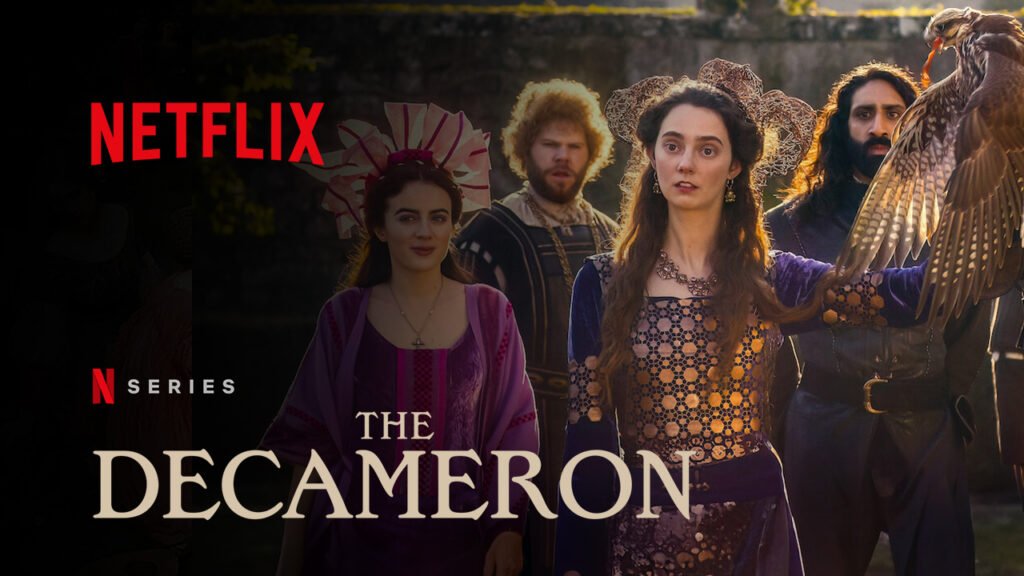
    The-Decameron
    Revisiting Boccaccio: ‘The Decameron’ Film Adaptation Premieres with Fresh Insights and Modern Twists 6

    Overall Review

    Overall, the production of “The Decameron” is a comprehensive endeavor that involves a collaboration of experts across various fields of filmmaking, all dedicated to bringing Boccaccio’s vivid world and timeless stories to the screen in a manner that honors the original while appealing to today’s viewers.Rea

    Production

    The production of “The Decameron” film adaptation involves a meticulous and historically sensitive approach to bring Giovanni Boccaccio’s 14th-century tales to life for a modern audience. Here’s a detailed look at various production aspects of this ambitious project:

    Setting and Location

    The film is set in the lush Italian countryside, reflective of the original setting of Boccaccio’s stories in and around Florence. The production team has chosen locations that capture the rustic charm and historical authenticity of medieval Italy. This includes filming in historic villas, secluded estates, and preserved medieval towns that provide a vivid backdrop to the narratives being told. The choice of location not only enhances the visual appeal but also grounds the adaptation in the same geographical and cultural context as the original text.

    Cinematography

    Renowned cinematographer Robert Richardson helms the visual storytelling of “The Decameron.” Known for his ability to capture rich, textured environments that evoke strong emotions, Richardson uses natural lighting and expansive landscape shots to immerse viewers in the period setting. His cinematography aims to contrast the beauty of the Italian countryside with the darker themes of the plague and the human condition explored in the stories.

    Costume and Production Design

    The film pays close attention to period accuracy in costumes and set design. Costume designer Sandy Powell works to recreate 14th-century clothing that reflects the social statuses and personalities of the characters. From the luxurious fabrics of the nobility to the simpler garments of the common folk, each piece is crafted to enhance the authenticity and depth of the narrative.

    The production design, led by a team experienced in historical dramas, focuses on detailing the interiors and exteriors to reflect the era accurately. This includes sourcing period-appropriate furniture, art, and decor items, as well as constructing sets that depict the architectural styles of medieval Tuscany.

    Direction and Script

    Luca Guadagnino directs the film with a vision that balances the historical context with contemporary relevance. His direction focuses on drawing out nuanced performances from the ensemble cast, ensuring that the emotional gravity and humor of Boccaccio’s tales are effectively conveyed. The script, adapted by Francesca Marciano and Guadagnino, updates the archaic language of the original text to accessible modern English while maintaining the poetic and philosophical essence of the stories.

    Music and Soundtrack

    Composer Alexandre Desplat provides the musical score for “The Decameron,” blending traditional Italian musical elements with modern orchestration to underscore the emotional and thematic undertones of the film. The music plays a crucial role in bridging the historical setting with the film’s contemporary treatment, enhancing the storytelling with auditory cues that reflect the mood and dynamics of the plot.

    Challenges and Achievements

    One of the primary challenges in producing “The Decameron” is balancing historical authenticity with the need to engage a modern audience. The production team must navigate the complexities of adapting a literary work that, while classic, requires a thoughtful approach to translate its themes and characters into a different medium and era.

    Key Theme

    The Decameron” by Giovanni Boccaccio is rich with themes that are both timeless and reflect the specific cultural and social milieu of 14th-century Italy. The key themes explored in the text, and likely highlighted in the film adaptation, include:

    1. Human Nature: Through the varied tales of the ten storytellers, Boccaccio explores the complexities of human nature. These stories often delve into the desires, vices, virtues, and follies of people, revealing a deep understanding of the human condition that transcends the specific historical context.
    2. Morality and Ethics: Many of the stories in “The Decameron” pose ethical dilemmas and explore moral questions. These narratives often challenge the prevailing morals of the time or highlight the discrepancies between public virtue and private vice, especially within the context of the Church and societal elites.
    3. Effects of Fortune and Chance: The role of fortune—or fate—in shaping people’s lives is a recurring theme in Boccaccio’s work. The stories depict life as unpredictable, where chance encounters and random events can dramatically alter the course of an individual’s destiny.
    4. Love and Relationships: Love, in its many forms, is a central theme of “The Decameron.” The tales explore romantic love, lust, the bonds of friendship, and familial affection, often highlighting the joy, pain, and irony that can emerge from these relationships.
    5. Power and Deception: Many stories involve clever schemes and deceit, whether for survival, to gain power, or to outwit a perceived enemy. This theme often serves to criticize social and political structures, showing how wit and cunning can prevail over authority and brute force.
    6. Resilience and Ingenuity: The overarching setting of “The Decameron”—a group of young people isolating themselves to escape the Black Death—highlights themes of resilience and human ingenuity. The act of storytelling itself is portrayed as a survival mechanism, a way to preserve sanity and social cohesion under duress.
    7. Escape and Imagination: The framing narrative of retreat and storytelling suggests a theme of escape from harsh realities through the imagination. The tales provide a temporary respite from the troubles of the outside world, celebrating the power of stories to transport, entertain, and enlighten.
    8. Social Commentary: Boccaccio uses “The Decameron” to comment on the society of his time, critiquing the corruption within the church, the class differences, and the gender dynamics. This reflective and often satirical lens invites readers (and viewers) to consider the social norms and injustices of their own times.

    These themes make “The Decameron” a richly layered work that can be adapted and interpreted in various ways, reflecting both historical and contemporary concerns.

    Also Read : Receiver: Unveiling the Psychological Thriller

    THE DECAMERON OFFICIAL TRAILER NETFLIX

    TV SHOWSMOVIESDOCUMENTARIESWEBSERIES